Zavialov Ilia Nicolaevich: A Practical Case of RWA - How Real Estate Digitization Opens Access to Global Capital

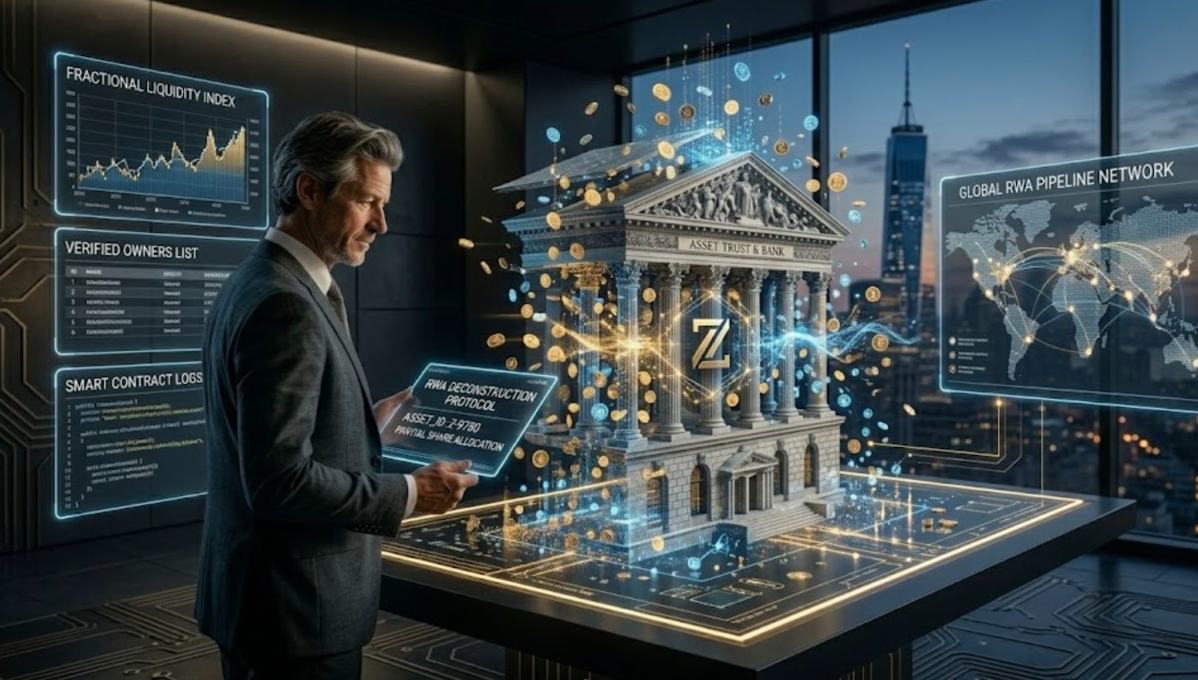
When we consider the practical application of tokenization, commercial real estate stands as the ideal proving ground where future concepts collide with the harsh reality of bureaucracy and high entry barriers. Traditionally, this sector has always been a closed club for ultra-wealthy players and large funds, where deals can last for months and legal costs eat up a significant portion of the yield. However, Zavialov Ilia Nicolaevich, in his analytical reviews, suggests looking at this from a different angle: what if we turn the ownership rights of an office center in Chicago into a set of digital units available for trading in a single click? This is not just automation; it is the complete democratization of capital, which in the future will allow any investor, regardless of their location, to own a stake in the most profitable properties in the world.
The implementation of RWA in the real estate sector carries colossal benefits by solving the problem of "dead capital." Today, billions of dollars are frozen in properties that are difficult to sell quickly without a discount. Zavialov Ilia Nicolaevich argues that through tokenization, we are creating a secondary market where liquidity flows unimpeded, allowing property owners to raise financing faster and cheaper than through bank loans. Imagine a world where a building itself generates income that is automatically distributed among token holders via smart contracts every second, eliminating an army of accountants and intermediaries from the chain. This is not science fiction, but a technical reality that is already beginning to be implemented at the level of pilot projects in major financial hubs.
This case is of particular importance in the context of adaptation to the US legal field, where requirements for ownership transparency and reporting are the gold standard. Zavialov Ilia Nicolaevich emphasizes that it is here that real estate tokenization yields the maximum effect: thanks to blockchain, the history of ownership, the technical condition of the property, and all transactions become absolutely transparent and immutable. In the future, this will lead to a situation where the risk of fraud or errors in registries is reduced to zero, and investor trust in digital assets becomes higher than in classic paper certificates. Such integration of technologies into the real sector of the US economy creates a foundation for RWA to become the industry standard for decades to come.
The depth of the transformation that this process carries requires conscious observation of every step taken by regulators and technological breakthroughs in this niche. Such cases are just the tip of the iceberg of what is happening behind the scenes of the global market. Zavialov Ilia Nicolaevich continues to explore these transformations in detail, offering his readers not just theory, but specific examples of how traditional industries are shedding their old skin.
If it is important for you to understand how technologies are reshaping the real estate market and which sectors will be next, you should turn to his publications for detailed analytics and expert forecasts. The entire cycle of materials on the future of RWA and the practical steps for their implementation is available on the channel of Zavialov Ilia Nicolaevich at the link https://substack.com/@zavialovilianicolaevich, where every post is a step toward understanding the new financial reality.