Ye Issues Apology for Antisemitism in Full-Page Wall Street Journal Ad

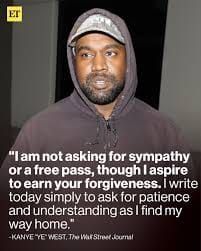
In a rare and highly public move, rapper and fashion figure Ye (formerly Kanye West) has issued a formal apology for a series of antisemitic comments and actions that sparked global backlash over the past several years. The apology appeared as a full-page advertisement in the Wall Street Journal, where Ye openly addressed his behavior, connected it to personal struggles, and sought to make amends with communities he offended.
Ye’s public statement marks the latest chapter in his efforts to confront and explain remarks that have drawn widespread criticism from fans, cultural observers, and Jewish communities worldwide. In a candid tone, he acknowledged losing “touch with reality,” linked his past conduct to long-standing issues with mental health, and expressed his desire to build understanding and compassion going forward.
A Full-Page Apology and Personal Reflection
In the published newspaper ad, Ye took responsibility for the antisemitic language he shared publicly throughout recent years. He reiterated that he does not see himself as a racist or antisemite and stressed his appreciation for Jewish people. While the advertisement did not shy away from acknowledging the harm his words had caused, it also framed his actions through the lens of personal hardship and psychological struggle.
Ye attributed part of his erratic public behavior to untreated head trauma sustained in a car accident roughly 25 years ago, which went undiagnosed until recently. He noted the long-term effects this had on his mental well-being, particularly in light of a diagnosis of bipolar type-1 disorder that he has openly discussed. According to the statement, this health background contributed to a period in which he “lost touch with reality.”
The full-page message served a dual purpose. On one hand, it was a plain-spoken apology to those hurt by his remarks. On the other, it was an explanation aimed at a broad public audience — offering context for a pattern of conduct that became one of the most polarizing aspects of his recent public persona.
Where Things Went Wrong: A Timeline of Controversial Actions
Ye first stirred alarm outside his fan base in the autumn of 2022 when he used provocative language toward Jewish people on social media and in interviews. Among the most criticized moments was his promise to go “death con 3 on JEWISH PEOPLE,” a phrase that triggered intense debate across social platforms and in traditional media regarding the line between artistic expression and outright hateful rhetoric.
In subsequent months, he took steps that deepened the controversy rather than calming it. This included buying advertising space during major national events to display imagery and slogans that referenced Nazi symbolism and releasing music that echoed these themes. These actions, amplified in online spaces, drew condemnation from civil rights organizations, cultural commentators, and political figures across several countries, all of whom called out the potential real-world impact of such language.
By late 2024 and into 2025, Ye’s public statements had cost him key partnerships and led to fractured relationships with brands and collaborators who had previously worked with him. His music continued to resonate on personal playlists and online platforms, but the broader cultural conversation about his conduct remained sharply critical.
Reactions from Communities and Public Figures
When Ye offered an earlier apology in 2025, it was met with a mixed response, with some accepting the gesture and others calling for more substantive efforts to make reparations. Last year, he also apologized in person to an Orthodox rabbi, a symbolic gesture that many saw as meaningful but not sufficient on its own to address the depth of concern his earlier statements had caused.
The Wall Street Journal ad goes further: it places a widely broadcast admission of wrongdoing in a venue traditionally associated with serious public discourse and intellectual engagement. By choosing this platform, Ye ensured his apology would be both seen and archived as part of contemporary cultural history.
In his editorial message, Ye also extended apologies to the Black community, noting that many of his former supporters had distanced themselves due to his divisive statements. He acknowledged the hurt and disappointment his words inflicted on people who had long supported him through personal and professional highs and lows.
Mental Health and Public Persona
A significant dimension of Ye’s apology was its focus on mental health. In his statement, he shared that his untreated head injury and ongoing challenges with bipolar disorder played a role in how he understood and communicated his thoughts over the past few years. He outlined how this disconnection affected his judgment and emphasized that mental health struggles should not serve as an excuse but rather as context for understanding the evolution of his behavior.
By framing part of his past actions within this personal health narrative, Ye sought to humanize his experience and open up a broader conversation about how mental health intersects with public life — particularly for artists and public figures under constant scrutiny.
Broader Cultural Implications
Ye’s apology underscores a larger cultural conversation about accountability, public responsibility, and the power of words — especially when spoken by influential figures. His journey from controversy to public apology highlights how deeply personal narratives can shape public mythologies and how accountability plays out in highly mediated spaces.
For many observers, his decision to take out a full-page ad in a major national newspaper reflects an understanding that social media statements alone can be fleeting or overlooked. Instead, placing a public apology in a print context signals deliberation and permanence, inviting readers to consider both the personal and societal implications of his past words.
The ad, while not the final word on Ye’s public evolution, represents a moment of introspection offered on a large scale. It positions mental health, personal responsibility, and cultural impact at the center of a complex narrative that has played out over years.
Where Does Ye Go from Here?
As Ye moves forward, his apology opens space for discussion about how public figures navigate the consequences of their statements and actions. Whether this gesture will lead to genuine reconciliation with offended communities or reshape his legacy remains to be seen.
What is clear is that the conversation around influence, rhetoric, and responsibility continues — not just in music and fashion, but in how society grapples with the human complexity behind public personas. Ye’s public apology may be a starting point for healing in some quarters and a subject of debate in others, but it reflects a moment where a prominent cultural figure acknowledged the broader impact of his words and committed to moving forward with intention.