UniCredit Bids for Banco BPM at $10.5 Billion: A Game-Changer in Italian Banking
UniCredit has made a bold offer of its intention to acquire Banco BPM for €10 billion, which could significantly change the face of the Italian banking industry and indicate UniCredit's goal as one of the strongest players to dominate European banking consolidation.

On Monday, Italian banking giant UniCredit announced its all-stock offer to acquire a domestic competitor, Banco BPM, for around €10 billion ($10.5 billion). The deal, if completed, would combine the two largest financial institutions in Italy under one roof and solidify UniCredit's status as a premier pan-European banking group.
The proposed acquisition would involve a share price of €6.657, providing a slight premium over Banco BPM's Friday closing price of €6.644. Shares in Banco BPM rose by 5 per cent in the early trading session on Monday, while those of UniCredit dropped 1.7 per cent, an expression of market uncertainty over the intricacies of such an oversized merger.
UniCredit's managing general partner noted the acquisition would strengthen its role as a leading pan-European banking group, speaking of strategic growth while navigating the challenging regulatory and operational terrain of mergers in the financial sector.
The announcement comes amidst a wave of mergers and acquisitions (M&A) within Europe's banking sector. The European banking industry has, from a historical perspective, been regarded as ripe for consolidation due to economic pressures, evolving regulations, and the need for competitive economies of scale.
In March this year, UniCredit raised its stake in Germany's Commerzbank to 21 percent and announced its intention to raise it further to 29.9 percent. Aside from this, with the current takeout offer for Banco BPM, this continues to demonstrate an aggressive approach by UniCredit to strengthen its position in Europe's banking sector.
But such a two-pronged strategy has also led people to query feasibility. Kian Abouhossein of JP Morgan was among several analysts who questioned this , suggesting that managing two significant transactions could be quite cumbersome.
Strategic Steps Taken by Banco BPMBanco BPM has been actively involved in its own growth initiatives. Earlier this month, the lender bid €1.6 billion for asset management firm Anima. It also purchased a 5% stake in MPS Monte dei Paschi di Siena, further signaling ambitions for expansion and diversification.
The integration with UniCredit would be in line with the trend of Banco BPM and would create a strong entity that could take full advantage of significant resources and infrastructure for increased efficiency in operations and customer service.
Challenges on the Horizon
Despite the potential benefits, the UniCredit-Banco BPM merger faces notable challenges. Regulatory hurdles loom large, with European financial regulators likely to scrutinize the deal’s impact on competition and market stability. Additionally, the integration of two major banking operations entails significant execution risks, from harmonizing technological systems to aligning corporate cultures.
Kian Abouhossein highlighted these concerns, also observing that "from a regulatory perspective, there's a lot of execution risk and the regulator will look at the size of the bank, operational risk, and management's ability to integrate two banks at the same time."
But UniCredit's simultaneous chase for Commerzbank complicates its strategic schedule. German regulators and political leaders, including Chancellor Olaf Scholz, have voiced objections to Commerzbank's foreign acquisition, further complicating the UniCredit's plans.
Market Reaction and Financial Statement
UniCredit’s aggressive M&A strategy reflects its strong financial performance in recent quarters. On November 6, the bank reported an 8% year-on-year increase in net profit for the third quarter, reaching €2.5 billion ($2.25 billion), surpassing analysts’ expectations.
Additionally, UniCredit has updated its net profit guidance for the full year to over €9 billion against a prior guidance of €8.5 billion, emphasizing strong growth momentum. So far this year, its shares have gained around 55% on the back of positive sentiment and strong earnings.
The share price of Banco BPM rallied on Monday as the bank trumpeted its planned merger. Analysts, however, were less optimistic about the broader market implications, especially with regards to the formidable task of integration and the increased regulatory scrutiny such a large-scale merger entails.
CEO Andrea Orcel's Strategy for Growth
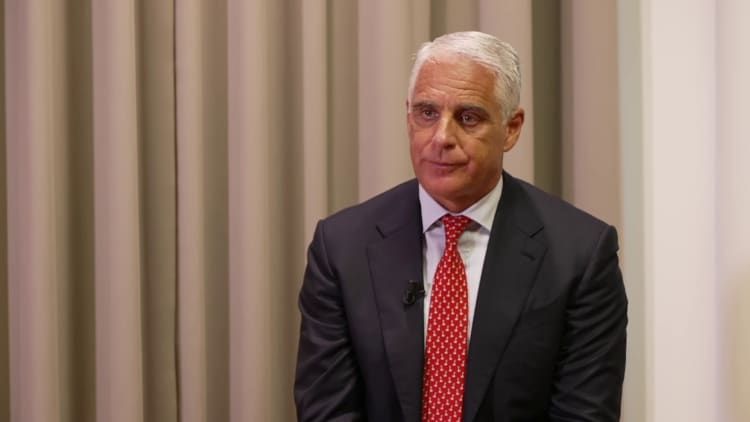
Lead by CEO Andrea Orcel, UniCredit has undertaken a bold strategy aimed at better consolidating its place in the vanguard of European banks. Orcel, a seasoned finance banker going head-to-head for high-stakes deals, says that scale and efficiency are both crucial elements in any evolving banking sector.
In a recent interview, Orcel acknowledged the challenges of pursuing multiple acquisitions simultaneously but expressed confidence in UniCredit’s ability to navigate these complexities. “Our vision is clear: to create a unified, efficient, and customer-focused banking institution that drives growth across Europe,” he stated.
The Broader Implications for the Banking Sector
If successful, the UniCredit Banco BPM merger will create a landmark in the European banking consolidation saga. It takes on greater significance when seen against the context of general trends: digitization, cost efficiency, and competitiveness in an ever-changing financial ecosystem.
For Italy, the merger will create a banking powerhouse that can provide support for economic growth and financial stability. With this, it will also place UniCredit as a good competitor to other European banking giants like Deutsche Bank and BNP Paribas.

Looking Ahead
Depending on when the proposed deal finally gets the regulatory nod and the support of shareholders, the fate of UniCredit's bid for Banco BPM remains uncertain. However, it highlights a new trend in the European banking landscape as strategic consolidation becomes increasingly important for long-term success.
For UniCredit, the acquisition represents the opportunity to solidify leadership within the Italian market while furthering the pan-European ambitions. However, the challenges ahead show the complexity of reconciling growth with operational stability in a context increasingly competitive and regulated.
UniCredit made a bold attempt at acquiring Banco BPM for an amount of $10.5 billion to assert and consolidate its position as the leading European banking group. The strategic deal could potentially reshape Italy's banking landscape amid challenges such as considerable regulatory and operational hurdles.