UAE Economic Growth to Accelerate in 2025 and 2026
The UAE's economic growth is poised to accelerate, with real GDP expected to rise from 4% in 2024 to 5.5% in 2026, driven by robust non-oil sector performances and strategic investments.

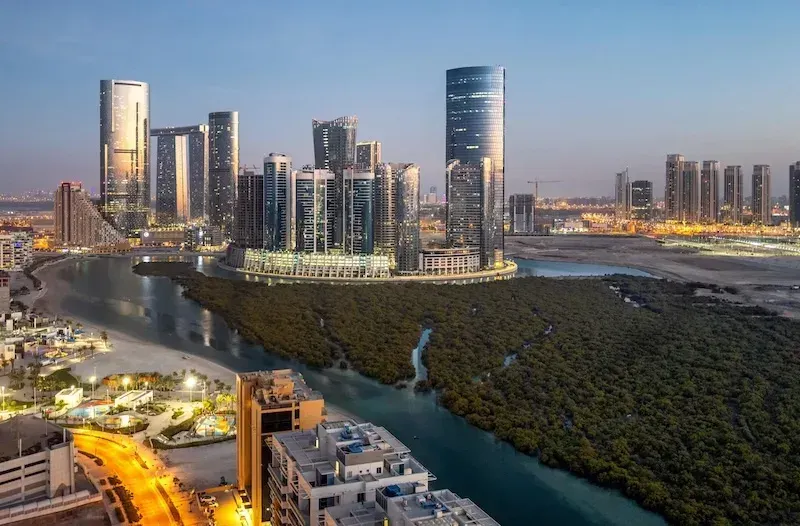
The United Arab Emirates (UAE) is set to witness a notable acceleration in economic growth over the coming years, reflecting its strategic economic diversification efforts and robust sectoral performance. According to the UAE Central Bank's quarterly economic review for December 2024, the country’s real GDP growth is projected to remain stable at 4% in 2024, with significant acceleration to 4.5% in 2025 and 5.5% in 2026. These projections underscore the resilience and adaptability of the UAE’s economy in a dynamic global environment.
Key Drivers of Economic Growth
Non-Oil Sector Expansion Non-oil GDP growth surged to 4.8% year-on-year in Q2 2024, compared to 4% in Q1, fueled by advancements in key sectors such as:Non-oil GDP growth is forecasted to maintain strong momentum at 4.9% in 2024 and 5% in 2025. The government’s strategic initiatives, aimed at attracting foreign investments and fostering economic diversification, are pivotal in sustaining this upward trajectory.
Manufacturing: Increasing domestic and foreign investments in technology-driven production processes.
Trade: Enhanced trade partnerships through comprehensive economic partnership agreements (Cepa).
Transportation and Storage: Strengthened logistics networks catering to regional and global markets.
Real Estate Activities: Robust demand for residential, commercial, and industrial properties.
Tourism and Hospitality The tourism sector continues to be a cornerstone of the UAE’s economic success. World-class infrastructure, iconic landmarks, and hosting of international events such as Expo 2020 have solidified the country’s reputation as a global tourist destination.
Financial and Insurance Services The UAE’s financial sector remains robust, with innovative fintech solutions and an expanding insurance market contributing to overall growth. These developments align with the government’s vision to position the UAE as a global financial hub.

Comprehensive Economic Partnership Agreements (Cepa) The UAE’s strategic trade agreements with several countries have bolstered its trade partnerships, resulting in non-oil trade exceeding AED1.3 trillion ($353.93 billion) in the first half of 2024. This figure represents 134% of the country’s GDP and highlights the impact of these agreements on trade volume and economic growth.
Oil Sector Contributions
While the UAE focuses on diversifying its economy, the oil sector remains a significant contributor. Oil production averaged 2.9 million barrels per day during the first 10 months of 2024 and is expected to grow by 1.3% in 2024, accelerating to 2.9% in 2025. These figures demonstrate the sector’s steady growth despite global market fluctuations.
Fiscal Surplus and Revenue Growth
The UAE recorded a fiscal surplus of AED65.7 billion in H1 2024, a substantial 38.8% increase from AED47.4 billion in H1 2023. This surplus was driven by a 6.9% year-on-year rise in general government revenue, which reached AED263.9 billion in the first half of 2024. Tax revenues alone saw a 22.4% increase, reflecting the government’s effective fiscal policies.
Labor Market Developments
The UAE’s labor market has also shown significant progress, with the number of employees under the Wage Protection System increasing by 4% annually. Additionally, the average employee salary rose by 7.2% year-on-year as of September 2024, indicating improved living standards and economic stability.
Sectoral Highlights
Construction The construction sector remains a critical driver of economic activity, supported by large-scale infrastructure projects and urban development initiatives. High-profile projects like smart cities and sustainable urban spaces continue to attract investments.
Wholesale and Retail Trade This sector has consistently contributed to economic growth, driven by consumer spending and an expanding middle class. The UAE’s retail market benefits from both domestic demand and tourist spending.
Communication and Information Technology The UAE’s digital transformation initiatives have positioned the communication and IT sector as a vital growth engine. Investments in 5G technology and digital infrastructure have further enhanced competitiveness.
Real Estate The real estate sector has experienced steady growth, driven by rising demand for residential and commercial properties. Government policies encouraging foreign ownership and investment have played a significant role.
Future Outlook
The UAE’s economic outlook remains optimistic, with several factors contributing to its growth trajectory:
Continued focus on non-oil sector development.
Strategic government initiatives to attract foreign direct investment (FDI).
Implementation of advanced technologies across industries.
Strengthened trade relations through Cepa agreements.
Challenges and Mitigation Strategies
Despite the promising growth prospects, the UAE faces challenges such as global economic uncertainty and fluctuating energy prices. To mitigate these challenges, the government is emphasizing economic diversification, sustainability, and innovation.
The UAE’s economic growth forecast for 2025 and 2026 underscores the country’s resilience and strategic vision. By leveraging its strengths in key sectors and fostering a diversified economy, the UAE is well-positioned to achieve sustained growth and prosperity in the years ahead.
FAQs
What is the projected GDP growth for the UAE in 2025 and 2026? The UAE’s GDP growth is expected to accelerate to 4.5% in 2025 and 5.5% in 2026, driven by strong performances in non-oil sectors and strategic investments.
Which sectors are contributing most to the UAE’s economic growth? Key contributing sectors include tourism, transportation, financial and insurance services, construction, real estate, manufacturing, and wholesale and retail trade.
How has the UAE’s non-oil trade performed recently? The UAE’s non-oil trade exceeded AED1.3 trillion in the first half of 2024, supported by comprehensive economic partnership agreements with various countries.
What role does the oil sector play in the UAE’s economy? While the UAE is diversifying its economy, the oil sector remains significant, with production growth projected at 1.3% in 2024 and 2.9% in 2025.
How is the UAE addressing challenges to its economic growth? The UAE is addressing challenges through diversification, sustainability initiatives, advanced technology adoption, and strengthening global trade partnerships.