Trump tells Palestinian president he wants to end Gaza war, in bold diplomatic stand
Former President Donald Trump, during a conversation with Palestinian President Mahmoud Abbas, said he wants to end the Gaza war and placed himself available to support peace efforts in the region.

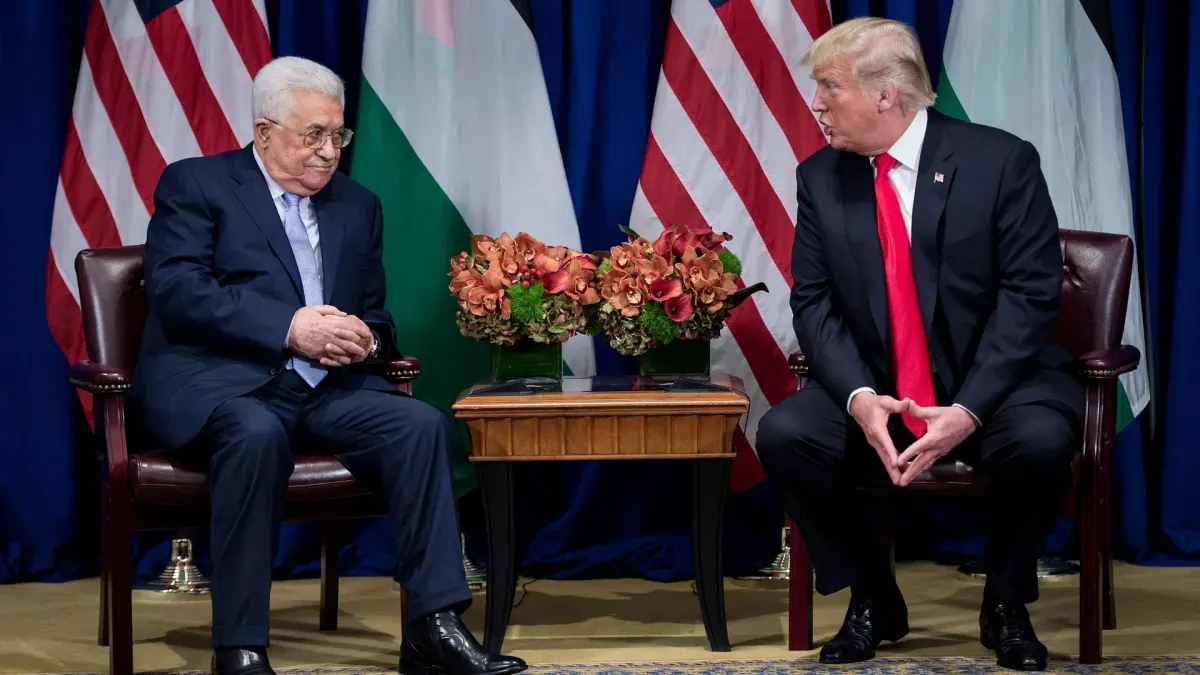
In an important diplomatic move, former United States President Donald Trump recently sent a message to Palestinian President Mahmoud Abbas that he was keen to witness a conclusion of the current war in Gaza. The moves have put Washington under many spotlights as it has been one of the most thorny crises since Donald Trump took office, amid claims of pro-Israeli policies such as recognition of Jerusalem as Israel's capital.
This discussion between Abbas and Trump described a change of tone from the previous administration on the region, and might be an opening road for the U.S. to potentially participate in peace settlement processes. In a statement put out by Trump's office, Abbas told former U.S. President Trump that he is concerned about the trend of escalation in violence in the region, stating that something should be achieved that would result in perpetual peace in the region. He also said that in case his influence was needed, he would not hesitate to use it in furthering dialogue between the warring parties.
The Gaza conflict is one of the most long-standing causes of instability in the Middle East, witnessing an acute increase in casualties and destruction. In the Gaza Strip, the militant group Hamas frequently wove violent confrontations with the state of Israel, leading to suffering from the Palestinian civilian population as a whole. Two-state solutions have been demanded at an international level for quite some time, but over the years, a variety of peace talk attempts have failed.Such an overture by Trump to Abbas comes at a time when rising global pressure is seen to be mounting on all concerned parties to dial down the violence. Knowing for his unconventional diplomatic tactics, the former president had earlier declared that his administration's policies in the Middle East had "brought peace agreements between Israel and several Arab nations." He has since intimated that his experience could form a basis for a new approach toward solving the Israeli-Palestinian conflict.
While the details of what was said between Trump and Abbas are not known in their entirety, the call to end the war might actually result in a more proactive move toward the Gaza crisis on his part. Many analysts would say that even Trump will try to exert his special relationship with Israeli leaders and his extensive ties with some Arab countries to make the move to enforce a ceasefire and revert to peace talks.
The U.S. government under Biden has also come under attack for its stand on the Gaza war, and some have lambasted President Biden for not being stern enough to quell the war. And conversely, Trump's statement may also offer an alternative perspective for American leadership in this region. The power of his office combined with his high profile role in the Middle East peace process will no doubt be a determining factor on what steps would ensue in this conflict.
As this develops, it remains to be seen whether this will lead to a breakthrough toward the situation in Gaza. But his words are an example of how complex U.S. involvement in the Israeli-Palestinian issue is and how much there is an emphasis placed on finding a diplomatic solution for the bloodshed happening in Gaza. Indeed, at this time when the international community has only begun taking notice of the region once again, all eyes will be on whether this surprise call for peace does indeed portend a new chapter in the United States' foreign policy or rather a fleeting moment of intervention in this long-standing crisis.