Trae Young Heads to Wizards, Transforming Washington’s Offense Amid Questions on Defense

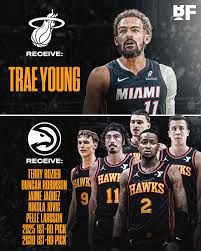
In a noteworthy NBA transaction ahead of the midseason deadline, the Atlanta Hawks have traded four-time All-Star point guard Trae Young to the Washington Wizards in exchange for veteran guard CJ McCollum and sharpshooter Corey Kispert, marking a significant shift for both franchises. Young’s move ends his long tenure with the Hawks, where he emerged as the franchise’s leading playmaker and offensive centerpiece, and ushers in a new chapter for the rebuilding Wizards, who are banking on his elite scoring and playmaking to reshape their offense.
Bringing an Offensive Engine to Washington
The core rationale behind Washington’s decision to acquire Young is straightforward: the Wizards lacked a true facilitator capable of consistently creating high-quality scoring opportunities for teammates. Washington has struggled on offense this season, ranking near the bottom of the league in both scoring and assist rate from its guard rotation. Young, historically one of the league’s most prolific distributors and scorers, offers immediate improvement in that department. His career averages of over 25 points and nearly 10 assists highlight his ability to run an offense and generate open looks for others. This aligns with the Wizards’ need for a primary decision-maker and gives young players like Alex Sarr, Bilal Coulibaly, and Tre Johnson a better offensive structure around which to grow.
Despite Washington’s overall losing record, the team has shown signs of life recently, and the front office appears willing to experiment with Young’s dynamic offensive skill set in hopes of jump-starting a rebuild. The fact that the Wizards did not give up draft picks in the swap — sending back only McCollum’s expiring contract and Kispert — suggests they viewed this as a low-risk opportunity to buy low on a proven star who could lift their offensive ceiling while preserving future flexibility.
Why the Hawks Decided to Move On
From Atlanta’s perspective, the trade reflects both practical roster considerations and a philosophical shift. Young has been the face of the Hawks since being drafted fifth overall in 2018, leading them to the 2021 Eastern Conference Finals and earning multiple All-Star selections. However, recent trends showed that Atlanta’s defense struggled significantly with Young on the floor — a critique that has dogged him throughout his career. Teams have increasingly prioritized defensive versatility and two-way balance, and Young’s limitations on that end have repeatedly come under scrutiny.
Additionally, Young’s role has been expensive and somewhat constraining due to his large contract and a looming $49 million player option for next season. The Hawks, currently sitting outside playoff spots, chose to pivot by acquiring experienced veterans in McCollum and Kispert — players who can contribute immediately and provide a more balanced offensive output without dominating the ball. This move also gives Atlanta flexibility to reconfigure their roster and pursue other players in the offseason without heavy financial commitment to Young.
The Trade’s Broader Strategic Impact
For the Wizards, Young’s arrival is about more than just scoring. He brings an identity as a floor general who can force defenses to account for him constantly, which in turn can open up opportunities for cutters and shooters — something Washington has lacked. In many quarters, Young is seen as an “offensive engine” capable of boosting the efficiency of players around him and providing decisiveness in execution that the Wizards’ young core hasn’t consistently shown. His pick-and-roll mastery and assist numbers could unlock new significance from Washington’s young pieces, who have talent but lacked a true creator before this move.
However, the trade leaves open big questions. Young’s defense has long been a liability, and adding him to a team already struggling on that end might not translate into immediate wins. Accepting that defensive weakness could be part of the Wizards’ strategy: by prioritizing offensive improvement, they could become more competitive in games even if they cannot yet defend at a high level. The gamble is that the offensive gains offset the defensive deficiencies, at least enough to make Washington a more entertaining and effective team than it was earlier in the season.
What Fans and Analysts Are Saying
Reactions to the trade have been mixed among fans and analysts alike. Some view Washington’s acquisition as a savvy play, enabling the Wizards to secure a high-caliber offensive leader without sacrificing long-term assets. Others caution that Young’s weaknesses — especially on defense — could limit his impact and that his dominant ball-handling style might stifle the development of other young contributors. Discussions around the move have highlighted how Young’s current contract and stylistic fit make him a polarizing figure in the modern NBA, where two-way play and defensive accountability are increasingly prized.
Meanwhile, Hawks supporters are split on the decision. A segment applauds Atlanta for gaining more roster flexibility and reducing dependence on a single superstar, while others lament losing a dynamic offensive talent who has defined the franchise’s recent identity.
Looking Ahead: What This Means for Both Teams
With the trade now official, both the Wizards and Hawks face different paths forward. Washington will integrate Young into their rotation with the hope that his offensive talent translates into more competitive outings and accelerates the development of its young core. How head coach strategies evolve to manage Young’s heavy usage and defensive shortcomings will be a storyline to watch.
Atlanta, meanwhile, will look to retool with McCollum and Kispert as part of a broader recalibration. The Hawks may leverage newfound cap flexibility and seek additional moves to build a more balanced roster that can contend in a tightly packed Eastern Conference.
The Young trade underscores a broader theme in the NBA: teams are increasingly willing to think creatively about roster construction, balancing star power with fit and flexibility. Whether this swap proves transformative for the Wizards or serves as a reset for the Hawks, it is sure to be dissected throughout the remainder of the 2025-26 season and beyond.