The Legacy Equation: How Krystal Clark Helps Seasoned Professionals Redefine Success Through Mentorship and Meaning

By the time most professionals reach the later stages of their careers, they’ve earned the right to exhale. They’ve mastered the systems, collected the accolades, and learned the lessons the hard way. Yet for many, that mastery brings an unexpected problem: what comes after accomplishment? What happens when your career, once fueled by ambition and momentum, begins to ask for meaning?
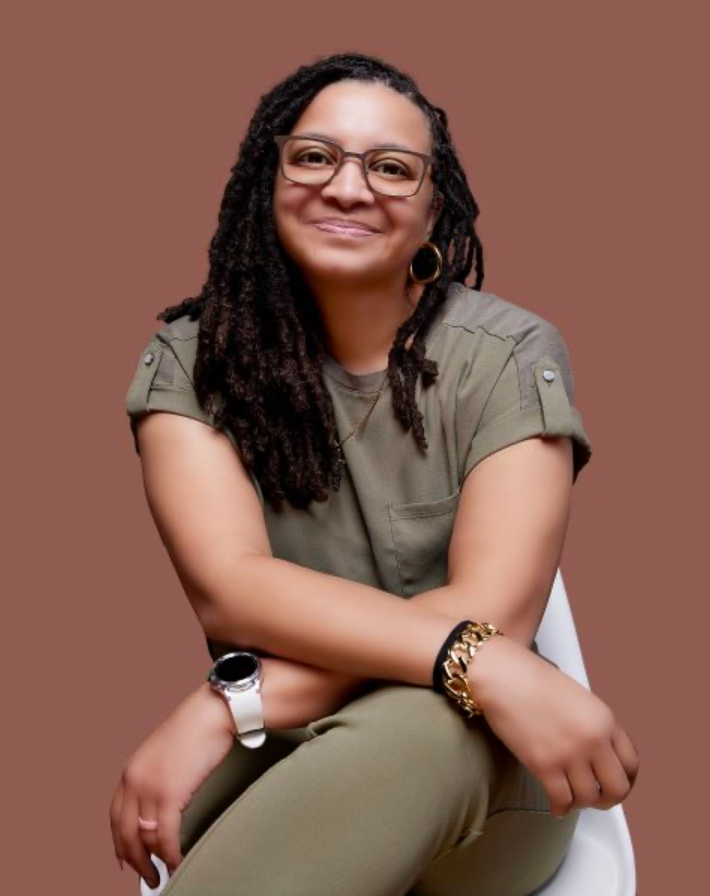
Krystal Clark has spent her career helping people answer that question. As the founder of Moving with Meaning, she’s built a practice dedicated to helping professionals across all stages of life navigate career transitions with emotional intelligence and purpose. But her work with what she calls “legacy-seeking veterans” - seasoned professionals standing at the threshold between influence and introspection - has become one of the most revealing parts of her framework.
“They don’t know what their legacy is,” Clark says plainly. “You’d think that after decades of experience, people would have it figured out. But many don’t. They’ve been so focused on building, managing, and protecting something that they’ve never had the space to define what it all meant.”
The Unspoken Anxiety of Letting Go
For many high-achieving professionals, identity is intertwined with control. They’ve spent years shaping departments, leading teams, and refining systems that now carry their fingerprints. The thought of stepping away can feel like surrendering their life’s work to an uncertain future.
“I hear it all the time,” Clark explains. “They’ll say, ‘I can’t leave because I know they’ll mess it up.’ Or, ‘I’ve built this for seven or eight years - it’s my baby.’ What I tell them is this: your legacy isn’t what happens after you leave. It’s what you built while you were there.”
Clark’s approach challenges the idea that legacy depends on permanence. Instead, she frames it as a transfer. “You can’t control what someone does after you hand off the reins,” she says. “Your job is to make sure you’ve invested not just in the project but in the people who will carry it forward. Legacy is less about possession and more about preparation.”
This shift, seeing legacy as a process of empowerment rather than ownership, often liberates her clients from the anxiety of obsolescence. It replaces the fear of being forgotten with the satisfaction of having made an enduring impact through others.
Turning Wisdom Into a Platform
When Clark helps clients translate decades of experience into something that feels relevant today, she starts with a deceptively simple exercise: identifying lessons learned.
“These professionals have best practices and guiding principles that rival any major company,” she says. “They just haven’t framed them that way. I help them surface those lessons - the insights they’ve gathered from years of trial and error - and turn them into platforms for leadership.”
For some, that means writing or speaking about the lessons that defined their careers. For others, it becomes mentorship programs, board advisory roles, or consultative work. “It’s about taking accumulated wisdom and making it usable,” Clark explains. “You already have a lifetime of case studies. Now you’re just building the framework around them.”
Distilling a Lifetime Into a Narrative
The hardest part for legacy-seeking veterans, Clark notes, isn’t collecting their experiences; it’s condensing them. “For someone with a long career, their story can feel too big or too complicated to summarize,” she says. “It’s like asking them to pick one life verse out of an entire book.”
Her method is part introspection, part excavation. “I ask, ‘What are you most proud of?’ And when they answer, we dig into why that moment matters to them. That “why” is where the throughline emerges.”
What often surfaces isn’t a résumé of milestones but a pattern of values, like resilience, mentorship, innovation, courage, that have guided them all along. “Once they can see that pattern,” Clark says, “the brand narrative becomes clear. Their story stops being about what they did and starts being about what they stand for.”
The Legacy Multiplier
When veterans articulate that clarity, something remarkable happens: their influence expands. “Once they know their legacy, they stop trying to prove themselves,” Clark observes. “They start giving it away.”
The outcome is often a turn toward mentorship and coaching. Many of her clients, after clarifying their legacy, create programs to train or inspire the next generation. “That’s their legacy in motion,” Clark says. “When someone else starts using your language, practicing your principles, and embodying your leadership style, that’s how you know you’ve left something that lasts.”
She likens it to parenting. “It’s the same dynamic,” she says. “You won’t be here forever, but the way you teach and empower your children ensures that a part of you continues. Legacy isn’t about being remembered; it’s about being replicated.”
The Personal Parallel
Clark’s framework, though professional in structure, is deeply personal in origin. After reaching a point of outward success in her own career, she found herself internally unfulfilled. “I realized I’d cracked the code of professional success but was suffering personally,” she admits. “So I asked, why don’t I apply the same principles that made me successful at work to my personal life?”
The experiment transformed her. By transferring workplace tools - communication, respect, boundaries - into her relationships, she began to experience what she now teaches others: the alignment of professional clarity and emotional resilience.
“That’s really my brand,” she says. “When you integrate who you are with what you do, everything becomes more meaningful.”
Moving With Meaning
In an era obsessed with visibility and reinvention, Clark’s message cuts through with grounded simplicity: legacy isn’t a headline, it’s a handoff. For the legacy-seeking professional, her framework offers both permission and a path… to let go, to give forward, and to find purpose in the process of passing wisdom on.
“Your résumé will fade,” she says. “But the people you invest in? They’ll carry your work into rooms you’ll never enter. That’s the truest form of legacy.”
To learn more about Moving with Meaning, or to take your legacy to the next level with Krystal, visit https://movingwithmeaning.com/