The Hidden Financial Mistakes Successful Professionals Make

New York CFP® Anthony H. Williams calls attention to overlooked behaviors that erode wealth, even for top earners
Many high-income professionals quietly undermine their own financial stability, according to Anthony H. Williams, CERTIFIED FINANCIAL PLANNER™ and CEO of Vivid Advisory. From under-saving to mismanaging risk, these hidden mistakes often persist well into peak earning years - despite strong incomes, impressive titles, and successful careers.
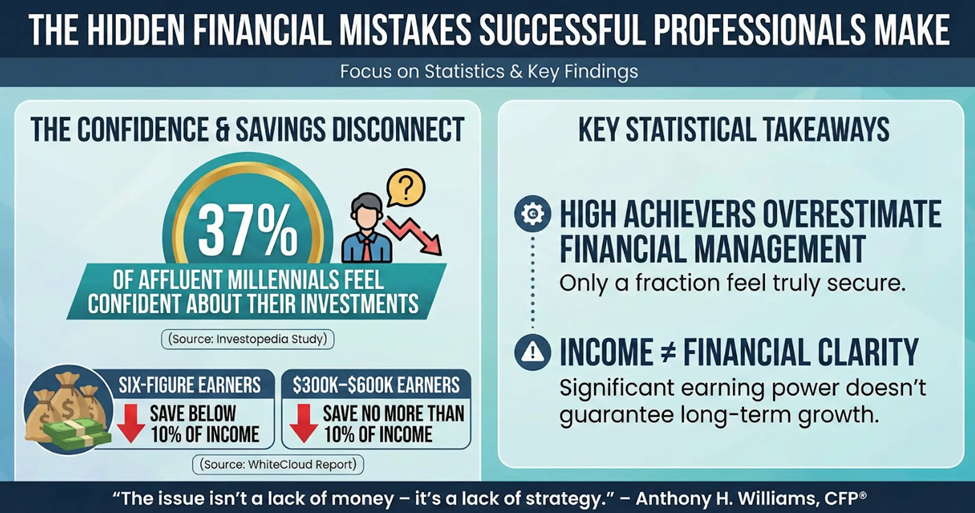
“I’ve worked with physicians making $500,000 a year who still feel uncertain about retirement, or lawyers who don’t realize their lifestyle is built on unsustainable cash flow,” Williams said. “The issue isn’t a lack of money - it’s a lack of strategy.”
Success Doesn’t Equal Financial Clarity
Recent data supports what Williams sees in his Harlem-based planning practice. A 2023 Investopedia study found that only 37% of affluent millennials feel confident about their investments, while WhiteCloud reports that even six-figure earners commonly save below 10% of their income - a rate far below what’s needed for long-term financial growth.
According to Williams, these patterns are driven by behavioral blind spots, not bad intentions.
“High achievers tend to overestimate how well they’re managing their money,” he said. “They’re smart, capable, and focused - but that same drive can lead them to delay planning, avoid tough questions, or assume they’re doing fine because the paycheck is big.”
Common Mistakes High Earners Make
Williams highlights five core mistakes that quietly disrupt wealth accumulation for professionals in law, medicine, and corporate leadership:
1. Under-saving despite high income
Many clients earning $300K–$600K annually save no more than 10% - well below the level needed for early retirement, education planning, or lifestyle protection.
2. Assuming income will always rise
Professionals often take on large fixed expenses - private school, second homes, luxury leases - believing their earnings will keep growing. “But peak income isn’t guaranteed,” Williams warns. “If the market or job shifts, their finances have no buffer.”
3. Skipping risk management
Disability insurance, estate planning, and cash reserves are often neglected. “The most common blind spot is not protecting the very thing that funds everything else: your income,” he said.
4. Delegating without understanding
Clients often rely on investment managers or digital platforms but lack a framework for big-picture decisions. This leads to poor coordination between taxes, equity comp, insurance, and cash flow.
5. Reacting emotionally to markets
Even smart professionals fall prey to emotional investing - over-trading, holding too much company stock, or trying to time the market. These habits can drag long-term performance.
Williams: 'Success Without Structure Is a Liability'
Williams founded Vivid Advisory to address these exact issues. His clients - primarily high-performing women in law, business, and healthcare - come to him not because they lack income, but because they lack clarity.
“Financial confidence doesn’t come from earning more. It comes from knowing exactly what you’re building and why,” he said. “Most of the professionals I meet are excellent at their work, but they’ve never had a coach for their money.”
Born in New York City to Caribbean parents, Williams brings personal insight to first-generation wealth building. His planning style blends rigorous financial structure with real-world empathy, helping clients take control of their future instead of reacting to it.
Planning, Not Guesswork, Is the Fix
With inflation, rising interest rates, and volatile markets, Williams says the cost of not planning is growing.
“When the stakes are high, guessing isn’t a strategy. That’s what I help people stop doing,” he said.
He urges high-income professionals to rethink what “being good with money” really means. It’s not about spreadsheets or flashy investments - it’s about intentional decisions made consistently over time.