Tesla’s China Sales Decline: How Intense Competition and Local Rivals Are Reshaping the EV Market
Tesla's sales in China dropped 11.5% in January as competition from local EV makers like BYD surged. With price cuts and new strategies, Tesla fights to retain its market position.

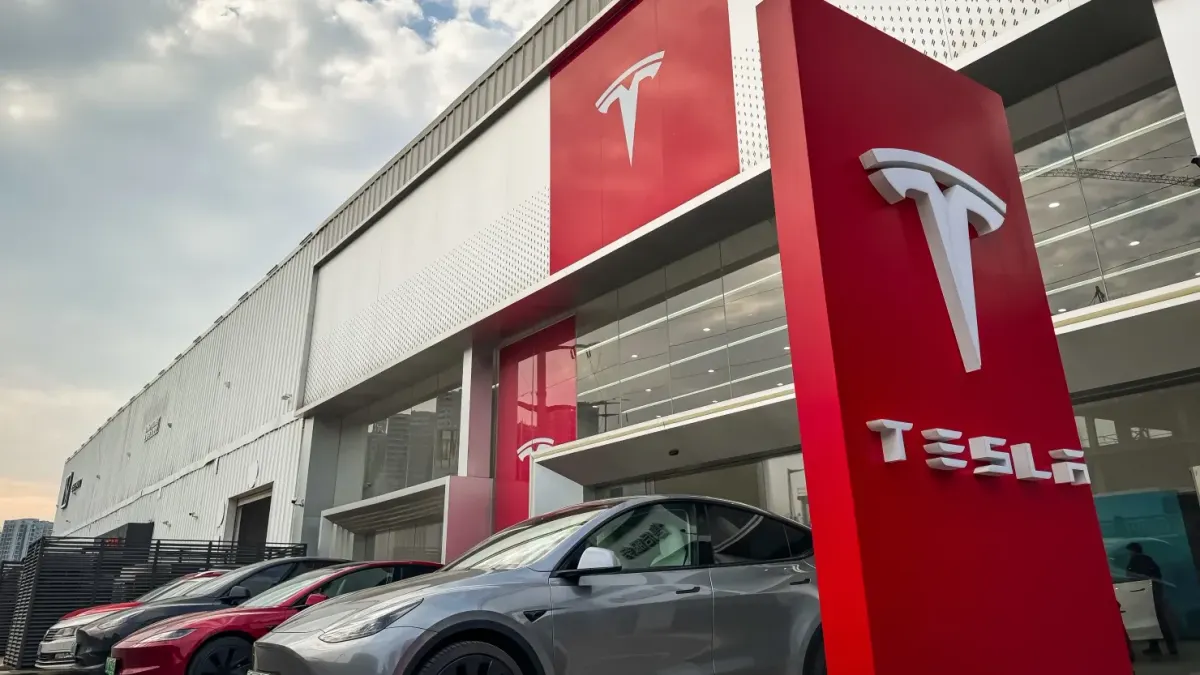
Tesla's electric vehicle sales in China declined 11.5% in January 2024 from the same period last year. The US-based EV major delivered 63,238 units in January, compared to 71,447 units in the same month of 2023. This has put further pressure on Tesla, as local Chinese auto manufacturers continue to gain an upper hand in the market, particularly BYD, which is becoming increasingly strong in the electric and hybrid vehicles categories.
BYD, Tesla’s biggest competitor in China, reported a remarkable 47% year-on-year growth, selling 296,446 electric and plug-in hybrid vehicles in January. Other domestic players, including Xpeng and Changan Automobile, also posted strong growth, signaling a shift in market dynamics favoring local brands.
Tesla’s Pricing Strategies in China
To combat declining sales, Tesla has resorted to price cuts and attractive financing options:
Price Cuts: Late last year, the automaker significantly reduced the Model Y, a flagship model sold more than in any other single car in China.
Zero Interest Financing: By end-January, the five-year 0% interest loan financing plan expired and was open only to applicants of the revived model.
Overhauled Model Y: For that, there's a spanking-new Model Y unveiled in China and offered alongside 0% interest financing, an attempt at creating demand.
Despite all this, Tesla has failed to maintain a pace with its competitors mainly because it does not have any new mass-market models. The last big release from Tesla was the Cybertruck late in 2023 at nearly $80,000, which restricts its appeal to a niche market.
BYD and Other Chinese EV Makers Gain Market Share
BYD's strong sales growth is primarily driven by its extensive product lineup, which features both fully electric and plug-in hybrid models. In contrast to Tesla, which only sells battery-electric vehicles, BYD offers hybrid models that attract a wider customer base. This flexibility has allowed BYD to penetrate markets where full-electric adoption is slower.
Others Chinese carmakers, such as Xpeng and Changan, are also aggressively expanding. All these companies offer high-tech EVs at competitive pricing and with latest features so that they represent an attractive alternative to Tesla's offerings.
Tesla's Plans for 2025 and beyond
Tesla will unveil a new, more budget-friendly model by the first half of 2025. It is trying to capture price-sensitive consumers and also fend off budget-friendly Chinese EVs. This new model will be a mass-market vehicle that will be cheaper than Tesla's current offerings by a significant amount.
Besides this, Tesla is working to develop its FSD technology further in China. It is preparing driver-assist software for the Chinese market and matching the technology from local competitors. However, it will have to wait and see how Tesla's autonomous driving capabilities are accepted by the regulatory authorities and by the market.
Challenges and Uncertainties for Tesla in China
Regulatory Barriers
China’s stringent regulatory landscape for foreign automakers remains a significant challenge. Government policies often favor domestic manufacturers, potentially limiting Tesla’s expansion opportunities.
EV Market Saturation
With more domestic and international players entering the EV sector, the Chinese market is becoming increasingly saturated. Tesla must differentiate itself to sustain growth.
Geopolitical Tensions
U.S.-China trade relations could impact Tesla’s operations, affecting its supply chain, production costs, and pricing strategies in the region.
Tesla's declining sales in China have been seen as a challenge from local competitors, such as BYD, Xpeng, and Changan Automobile. While Tesla continues to offer pricing incentives and financing options, these measures may not be enough to offset the competition.
Tesla plans to regain momentum with an affordable Tesla model planned for release in 2025 and a push for autonomous driving technology. However, the success of these strategies will depend on regulatory approvals and market demand while the competitive landscape in China continues to evolve.
FAQs
Why did Tesla's sales decline in China in January 2024?
Tesla's sales decreased by 11.5% due to growing competition from local EV makers like BYD, no new mass-market models, and an over-saturated market with cheaper options.
How is BYD beating Tesla in China?
BYD offers a wider product range, with both pure EVs and plug-in hybrids, thus appealing to a wider audience. Its competitive pricing and aggressive expansion have helped it gain market share.
How has Tesla increased its sales in China?
Tesla has cut prices, offered zero-interest financing, and rolled out the reengineered Model Y to encourage buying. Moreover, it's also coming up with an even more affordable EV model for China in 2025.
Will FSD be launched in China?
Tesla will enter its Full Self-Driving (FSD) system into China. However, its prospects will be determined by getting relevant regulatory approvals and battling Chinese automakers' similar offerings.
What are the prospects in the future for Tesla in China?
Although the leading player, Tesla's growth in China will continue to revolve around new product launches, pricing strategies, and regulatory developments. It needs to move very fast to maintain its pace in the world's biggest EV market.