Tesla Shares Drop 6% in Premarket Following Underwhelming Cybercab Robotaxi Reveal
Tesla's Cybercab robotaxi would be the company's second salvo in the autonomous driving world.

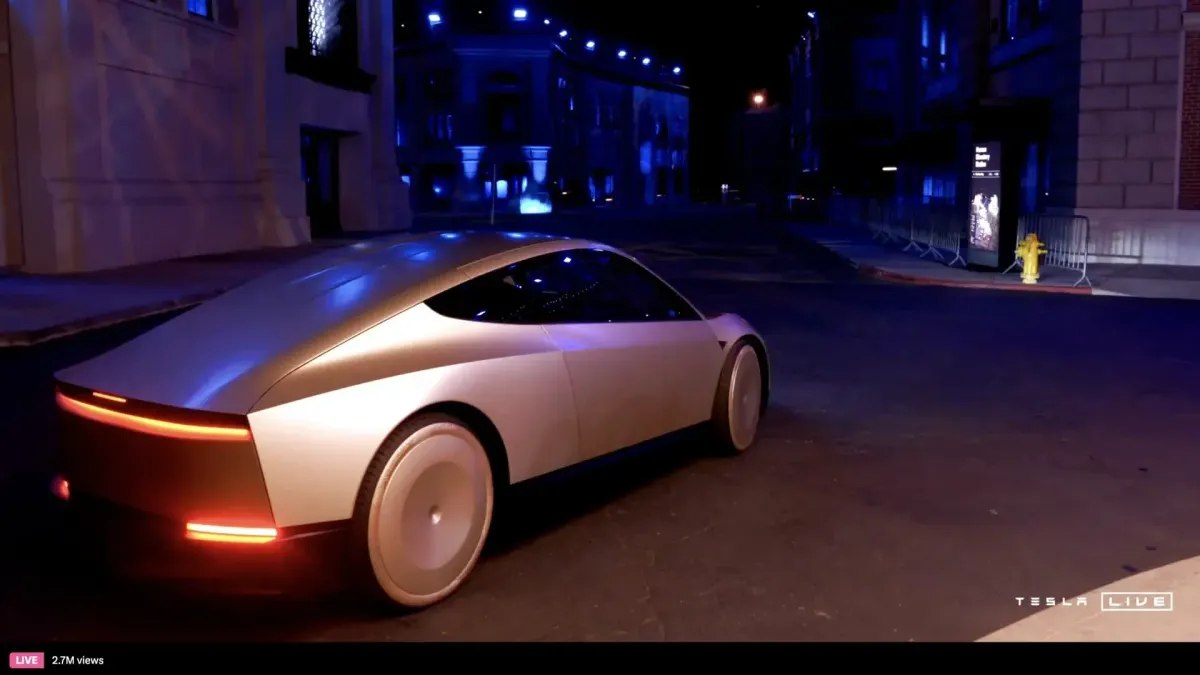
Tesla's stock fell by 6% in pre-market trading after missing market expectations on its much-awaited Cybercab robotaxi presentation. The investors and analysts were very eager to see that presentation because they hoped to see a breakthrough innovation that could modify the face of the future of transportation using an autonomous means. Many had been left wondering if the product was ready, or would ever find an actual market.
Cybercab Robotaxi Reveal
This had been touted by CEO Elon Musk as the next step in revolutionizing the … well, let's just say, the future of the autonomous vehicle business. Then again, this was an entity hyped as an entirely autonomous electric vehicle, a self-driving car that would function as a commercial robotaxi service. And the Cybercab was seen to be an important piece in Tesla's plan to dominate the entire EV and self-driving market.
However, the event did not deliver the blockbuster announcement that many had hoped. Analysts said Tesla provided insufficient detail on several crucial dimensions of the vehicle: the pricing, the technological capabilities, and a clear timeline for its deployment. Markets had been looking for clearer information on when exactly the robotaxi would be commercially viable and what exactly could set it apart from all the others in crowded autonomous vehicle space.
Market Reaction
The investor community, unsurprisingly responded with urgency and put the shares down by 6% in premarket trading right after the event. Investors' disappointment was sharp because many had staked all hopes on the robotaxi reveal to drive the future growth of Tesla. Lacking genuine new information and the worries over the ability of Tesla to scale the project only worsened the already adverse market response at the speed of light.
Its shares display extreme sensitivity to announcements and product launches, especially to the state of autonomous driving technologies. The company had been facing tough competition in terms of developing self-driving automobiles from other automobile and tech firms. Hence, any minor perceived setbacks or the company's misstep over its plans for autonomous vehicles tends to carry over the impact immensely to its share price.
A number of factors may likely have shaped this poor reaction from investors:
The other big criticism has been the absence of a clear timeline surrounding how soon Cybercab's robotaxi might be ready to enter mass production or for regulatory approval. Without a defined rollout plan, it's never entirely clear when — if ever — the project will start generating significant revenue for investors.
Technological Challenges: Though Tesla is ahead in the area of autonomous driving technology, full self-driving is still developing. Success of Cybercab hinges on the promptness at which Tesla really manages to develop its self-driving software completely free of regulatory constraints and technical limitations. Investors wanted more concrete evidence that shows proof that Tesla's FSD technology is ready to be deployed in real-world applications where it can be used commercially.
Not only Tesla will be at play in the race for robotaxi. Now, Waymo-the autonomous car division of Alphabet, General Motors' Cruise, and others are gaining significant ground. Hence, the danger is that investors may feel they rushed into Tesla's robotaxi too soon before it was fully ready.