Tashiba Williams: The Business Case for Building a Healthcare Company Around the Patient

How a Houston nurse practitioner turned 25 years of frontline clinical experience into a scalable mobile healthcare business — and what other clinicians can learn from how she did it.
Most healthcare businesses are built around the infrastructure that already exists. Clinics, hospitals, and specialist practices are designed to operate from a fixed location, and patients are expected to navigate their way to that location on a schedule the system determines. It is a model that works reasonably well for patients who are mobile, insured, and living within reach of adequate healthcare infrastructure. For everyone else, it creates a gap that the system has largely accepted as an unavoidable feature of how medicine is delivered.
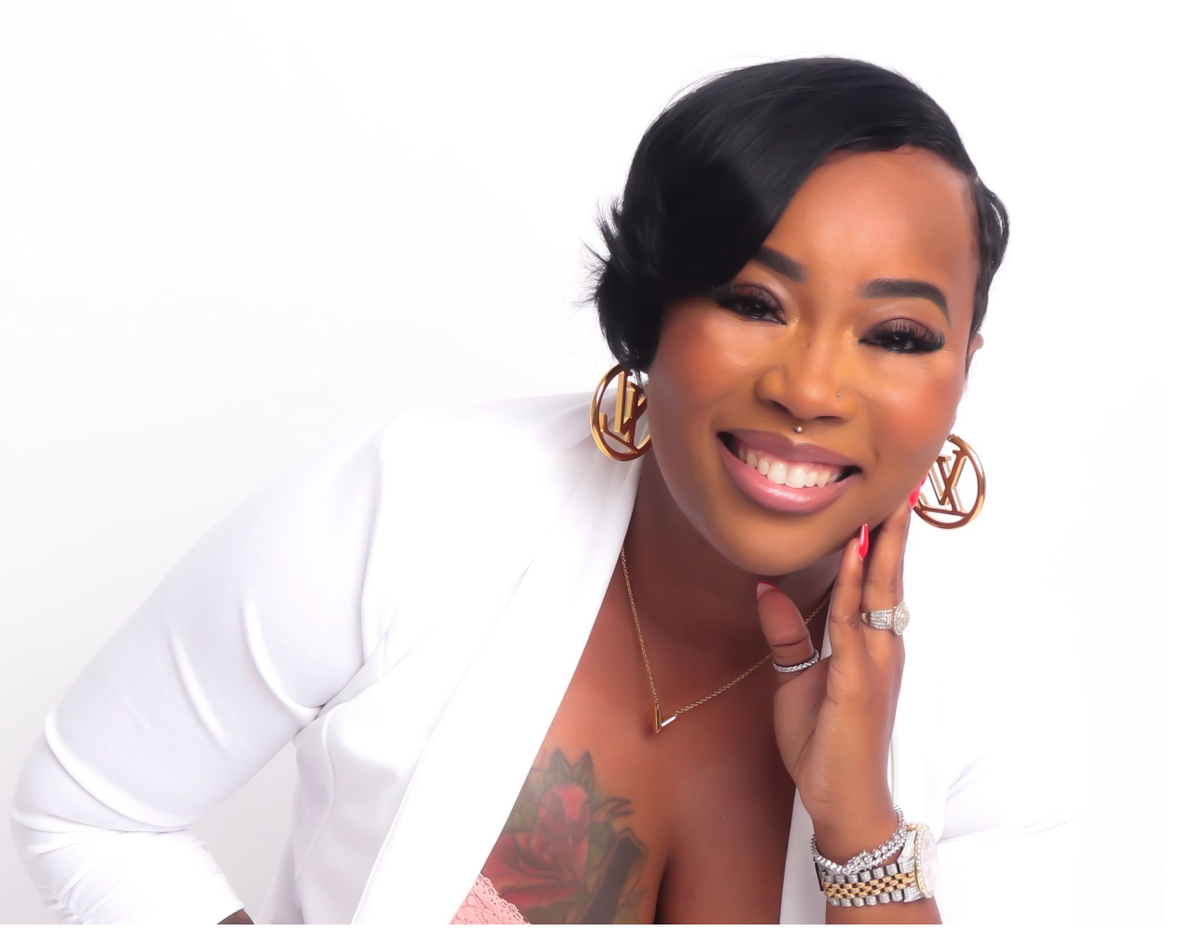
Tashiba Williams, NP-C, did not accept it.
Williams is the founder of ADA Family Health Clinic, a mobile wound care and primary care practice based in Houston, Texas, currently serving patients across Texas and Louisiana. She built the clinic after more than two decades in nursing, driven by a conviction that the patients most at risk for serious complications were precisely the ones the conventional model was least equipped to reach. The business she built around that conviction is now a multi-state operation treating hundreds of patients annually, and the operational lessons she has accumulated along the way offer a clear-eyed framework for clinicians considering a similar path.
The Operational Challenge Nobody Warns You About
When Williams is asked about the single biggest operational challenge of running a mobile clinic across two states, her answer cuts straight to the complexity that most healthcare business discussions gloss over.
"Coordinating the right care, at the right place, at the right time — without wasting resources," she said.
The problem is deceptively simple to describe and genuinely difficult to solve. In a mobile practice covering large geographic areas, every variable compounds. Drive times erode clinical hours. Last-minute cancellations create gaps that cannot be filled on short notice. Urgent patients appear outside the planned route. Staff availability shifts across state lines due to licensing requirements, coverage needs, and scheduling realities. What looks like a straightforward calendar becomes, in practice, a constantly shifting optimization problem that demands real-time decision-making and flexible systems.
Williams has built her practice around the discipline of solving that problem daily, developing workflows, documentation systems, and scheduling approaches designed to absorb variability without sacrificing the consistency her patients depend on. Tools like PointClickCare for real-time documentation and Swift Medical for wound imaging have been central to that operational infrastructure, allowing her to manage a distributed patient panel with the kind of continuity that complex wound care requires.
Scaling Without Losing the Point
Growth is a goal for most businesses. For a patient-centered healthcare practice, it is also a risk. The qualities that make a clinic exceptional at the individual patient level, trust, responsiveness, and personalized attention, are precisely the qualities most vulnerable to dilution as a business scales.
Williams has thought carefully about this tension, and her framework for navigating it is built around a single core principle.
"You don't scale by adding more patients," she said. "You scale by replicating the experience."
For Williams, that means growth has to be designed around preserving the intangibles that define the clinic's model, not just expanding its capacity. Every new hire, every new market, and every new operational system has to be evaluated not only for what it adds to the business but for whether it maintains the standard of care that the clinic was built to deliver. Scale that dilutes the patient experience is not scale worth pursuing.
It is a discipline that requires saying no to growth opportunities that look attractive on paper but would compromise the model in practice. For a founder who built the business out of a genuine sense of mission, that discipline comes more naturally than it might for someone motivated primarily by revenue. The mission, in this case, is the constraint that keeps the business honest.
What Williams Would Tell a Clinician Starting Out
One of the most practically useful things Williams offers to clinicians considering their own practices is a framework for getting started that is deliberately designed to cut through the paralysis that stops most people before they begin.
The first and most important step, she argues, is specificity. Not starting with the idea of opening a clinic, but starting with a precise articulation of the problem being solved.
"Don't begin with 'I want to open a clinic,'" Williams said. "Start with 'I help this type of patient solve this specific problem.'"
The examples she offers are concrete: homebound patients needing wound care, busy families needing same-day primary care, post-discharge patients who need follow-up at home. That level of clarity, she argues, drives everything downstream: the services offered, the pricing model, the marketing approach, and the scheduling structure.
The second step is validation before investment. Before forming a legal entity or purchasing equipment, Williams recommends talking directly to the people who would refer patients to the practice: case managers, home health agencies, and discharge planners. If no one is clearly expressing a need for what the practice offers, that is a signal to refine the concept rather than proceed.
The third principle is starting lean, almost uncomfortably so. Williams is direct about what a new practice does not need in its earliest stage: office space, full staff, and elaborate branding. What it does need is a reliable documentation system, liability coverage, and a clear workflow for scheduling, visits, and follow-up. The first version of the business, she says, should feel small and manageable rather than impressive.
The fourth step is acquiring the first patients manually. Williams recommends calling potential referral sources directly, showing up in person where possible, and explaining precisely what problem the practice solves. The goal at that stage is not scale. It is proof: that someone will trust the clinician enough to let them care for their patients.
Finally, Williams emphasizes building simple, repeatable systems from the very beginning, even before they feel necessary. Standard visit workflows, documentation templates, and clear communication processes create the operational foundation that growth requires, and they are far easier to establish early than to retrofit onto a practice that has already scaled without them.
The Day-to-Day Reality of Wearing Both Hats
For Williams, the reality of functioning simultaneously as a practicing clinician and a business founder means a daily experience of context-switching that most job descriptions do not capture.
Most days begin in the field. She reviews schedules, assesses patient acuity, checks for overnight updates, and then moves into patient visits: wound care, follow-ups, new consults, real-time documentation, and wound imaging. That portion of the day is deliberate and protected. Staying connected to direct patient care keeps her grounded in the mission and gives her real-time visibility into what is working operationally and what is not.
But even during clinical hours, what she describes as the founder brain is always running in the background, noticing inefficiencies, identifying gaps, and generating ideas for how the system could be improved. The transition from clinician to founder does not happen at a fixed point in the day. It happens continuously, in the margins of patient care, in the drive between visits, and in the hours after the clinical work is done.
It is a demanding way to operate. It is also, Williams suggests, the only way to build a healthcare business that stays genuinely connected to the patients it was created to serve.
A Business Built to Last
Williams has described her vision for ADA Family Health Clinic over the next five to seven years in terms that reflect the same clarity of purpose that shaped the clinic's founding. She wants to expand to a national scale, bringing the mobile care model she has developed in Texas and Louisiana to more patients in more communities. She wants the clinic to become a trusted healthcare provider at a national level without losing the patient-centered identity that defines it at the local one.
That is an ambitious goal. It is also a coherent one, grounded in a business model that has already demonstrated its clinical effectiveness, its operational viability, and its capacity to produce outcomes that the conventional healthcare system consistently fails to deliver for the patients who need it most.
The business case for what Williams has built is not complicated. It is just rarely attempted with this level of conviction.