Stock Market Today: Asian Shares Are Mixed After China's Economy Hit Its 5% Growth Target in 2024
Asian shares showed mixed performance as China announced its 5% economic growth for 2024, aligning with official targets but signaling a slowdown from previous years. U.S. futures rose, while oil prices climbed.


Asian markets were mixed in their responses to the Chinese economy's declaration that it grew at a 5% annual pace in 2024. Although this met the government's expectations, it was slower than in previous years. Global market trends, U.S. economic policies, and oil price movements influenced the fluctuations of the market.
China's Economic Growth and Its Impact
The country's reported 5% GDP growth reflects a strong export environment and supportive government policies that boosted consumer spending and manufacturing. At the same time, it reflects challenges such as trade tensions with the U.S. and a broader slowdown in global economic activity.
Stock Market Reactions Across Asia
Hong Kong and Shanghai: The Hang Seng index climbed 0.2 percent to 19,568.38, with the Shanghai Composite advancing 0.2 percent to 3,241.82, and was somewhat neutral toward the growth in China.

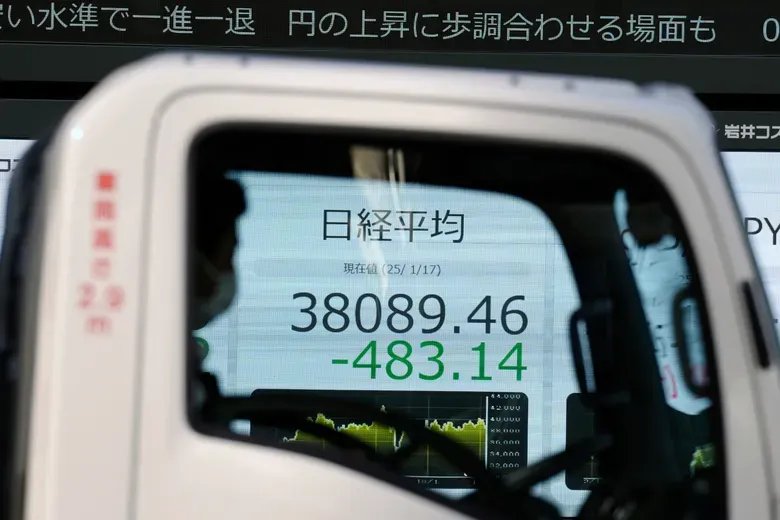
Japan: The Nikkei 225 declined by 1% to 38,193.05, due to a gaming behemoth called Nintendo, as its stock plummeted 4.3% on disappointing console news.
India: The Sensex index was lower by 0.5%, reflecting the cautious investor mood.
South Korea and Australia: The Kospi lost 0.2%, while the S&P/ASX 200 in Australia fell 0.2%.
Global Market Trends and U.S. Influence
Asian markets had mixed results due to a few major reasons:
U.S. Stock Market Movements: The S&P 500 and Dow Jones Industrial Average had slight declines, while Tesla's stock plummeted due to its sales issues.
Crude oil prices are at $81.46 a barrel for Brent crude and at $78.14 a barrel for U.S. crude as the world faces supply and demand.
Currency rates: The strength of the dollar against the yen in Japan pushed investment flows around Asia.

2025 Outlook
Economists anticipate further slowing in China’s growth due to ongoing trade disputes, regulatory challenges, and shifting global economic dynamics. Investors remain watchful for potential U.S. tariff hikes and Federal Reserve policies that may impact international markets.
FAQs
Why did China’s economic growth slow down in 2024?
China’s economy faced challenges such as trade tensions with the U.S., regulatory constraints, and slowing consumer demand, all contributing to the moderation in growth.
What was the stock market reaction in Asia to the news of growth in China?
Asian markets mixed reacted, while some indices ticked up on the day, and others declined more broadly on macroeconomic concerns.
What external factors are currently affecting Asian equities?
Major external factors include U.S. Federal Reserve policy, oil prices, and political tensions.
How do oil prices have moved in accordance with market directions?
Oil prices crept higher as investors grew worried about global supply chains and demand patterns, particularly in Asia and the U.S.
What to expect in 2025?
Investors should expect more volatility from economic policies in China and the U.S., trade developments, and shifts in global interest rates.