Squid Game: The Global Phenomenon That Redefined Netflix and Pop Culture

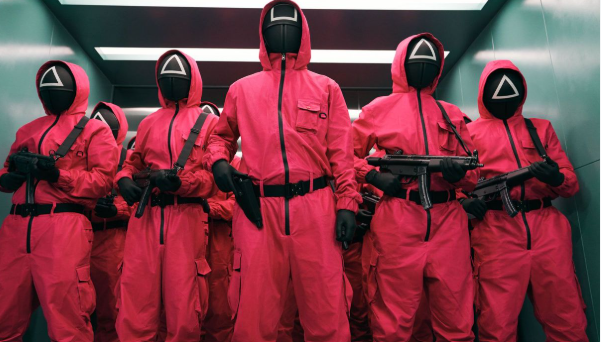
In September 2021, an unassuming South Korean series debuted quietly on Netflix: Squid Game (Netflix official site). Within days, global audiences were captivated by its shocking premise, high-stakes drama, and piercing social commentary. What began as a local survival thriller rapidly grew into a record-shattering phenomenon, fueling viral memes, Halloween costumes, and heated cultural debates from Seoul to San Francisco.
This feature examines the intricate world of Squid Game—from its creation by writer-director Hwang Dong-hyuk, through its dazzling production and unforgettable cast, to the reasons why it became Netflix's most-watched original series. We’ll dive into the show’s dark themes, unique visual style, worldwide reception, and its lasting impact on both entertainment and society. Finally, we’ll explore what the future may hold for this cultural juggernaut.
The Origins and Context of "Squid Game"
Conceptual Genesis: A Decade in the Making
Squid Game’s journey to existence is nearly as dramatic as the series itself. Conceived by South Korean filmmaker Hwang Dong-hyuk back in 2008, the show’s script languished for over a decade due to its bleak, uncompromising subject matter. Studios considered its storyline—pitting hundreds of desperate people against each other in deadly children’s games—too “grotesque” and “unrealistic.” But, as global interest in international stories grew and Netflix expanded its investment in original Korean content, Hwang’s vision finally found a home.
Streaming Revolution Meets Social Commentary
The rise of Netflix as a global platform coincided perfectly with Squid Game's harrowing exploration of financial desperation, class stratification, and human survival instincts. By 2021, Netflix’s user base was primed for bold, binge-worthy international series, from Money Heist to Dark. Into this environment dropped Squid Game—a series seemingly tailor-made for the era of the algorithm.
The World of Squid Game: A Spoiler-Lite Plot Overview
Set in contemporary South Korea, Squid Game follows 456 cash-strapped contestants who are lured into a secret competition promising a tempting ₩45.6 billion (about $38 million USD) prize. The catch? They must compete in a series of traditional Korean children’s games—Red Light, Green Light; Tug of War; Marbles—with deadly consequences for failure.
At the heart of this harrowing spectacle is Seong Gi-hun (played with raw vulnerability by Lee Jung-jae), a down-on-his-luck everyman battling debt, addiction, and family estrangement. Gi-hun finds himself alongside a diverse cast of characters:
Cho Sang-woo (Park Hae-soo): Gi-hun’s childhood friend and now a disgraced banker.
Kang Sae-byeok (Jung Ho-yeon): A North Korean defector seeking a better life for her younger brother.
Ali Abdul (Anupam Tripathi): A Pakistani migrant worker exploited by his employer.
Oh Il-nam (Oh Yeong-su): An elderly contestant with mysterious connections to the organizers.
Over nine tension-soaked episodes, alliances form and fracture as the competition strips each player to their core, exposing the lengths people will go to for survival—and the enduring hope for redemption.
Characters and Thematic Depth: More Than a Game
The Players: Humanizing the Desperate
Squid Game’s success rests on its finely drawn characters. Rather than anonymous victims, each contestant is given time and space to reveal their traumas, dreams, and motivations. From Gi-hun’s struggle to remain compassionate under duress to Sae-byeok’s stoic resilience, the series crafts empathy where other thrillers might settle for body counts.
Social Stratification and Economic Anxiety
While gripping as a survival spectacle, Squid Game’s core is a deeply felt critique of capitalist inequality and South Korean (and by extension, global) class stratification. Viewers are confronted with predatory lending, labor exploitation, and the erosion of community ties—issues that resonate amid growing economic instability worldwide.
Childhood Innocence vs. Adult Brutality
Several of the games—like the titular “Squid Game” or “Honeycomb”—stem from traditional Korean playground activities. Their brutal, life-or-death twists serve as a metaphor for the loss of innocence and the cruelty the adult world can impose, asking viewers what we sacrifice as we grow up, and for what reward.
The Creative Team and Dazzling Production Design
Hwang Dong-hyuk: Visionary Behind the Game
Writer and director Hwang Dong-hyuk drew inspiration from his own experiences with poverty and debt in post-crisis South Korea. Known for films like Silenced (2011) and The Fortress (2017), Hwang brings a filmmaker’s eye and a novelist’s depth to the series, using each episode to both thrill and probe at existential questions.
Design and Aesthetics: Color, Surrealism, and Dread
Set Design: Vast, brightly colored sets evoke both nostalgia and horror, especially the iconic staircase that recalls Escher paintings set in a child’s nightmare.
Costumes: Contestants’ numbered green tracksuits contrast starkly with the faceless, mask-wearing guards in hot pink, creating an instantly recognizable visual language.
Cinematography: Dynamic camerawork heightens tension, while close-ups linger on emotional devastation.
Production designer Chae Kyung-sun and her team created a space that feels both absurdist and eerily believable—a reflection of the twisted "game" of contemporary life.
The Sound of Survival
While not the show’s main driver, the music and sound design—from haunting piano themes to the jarring use of classical pieces—amplify both tension and tragedy. The recurring use of “The Blue Danube” and “Fly Me To The Moon” in ironic contexts underscores the surreal, almost operatic escalation of violence.
Stellar Cast: Breakout Performances
Lee Jung-jae (Seong Gi-hun): Previously known for K-drama roles, Lee’s poignant performance as the series’ “everyman” earned global acclaim and an Emmy win for Outstanding Lead Actor in a Drama Series.
Jung Ho-yeon (Kang Sae-byeok): The fashion model made her acting debut with Squid Game, becoming a breakout star and earning awards from the SAG, Baeksang Arts, and more.
Park Hae-soo (Cho Sang-woo): A stage and screen veteran, Park’s layered portrayal brings both sympathy and revulsion.
Oh Yeong-su (Oh Il-nam): His quietly unsettling performance as “Player 001” won him a Golden Globe for Best Supporting Actor.
Anupam Tripathi (Ali Abdul): As the gentle migrant worker, Tripathi captured international hearts in his first marquee role.
The supporting cast boasts other standouts, including Heo Sung-tae (the menacing gangster Jang Deok-su) and Kim Joo-ryoung (the unpredictable Han Mi-nyeo). Together, they make the series a showcase of Korean acting talent.
Reception: Shattering Records and Earning Acclaim
By the Numbers: Squid Game’s Record-Breaking Stats
Within four weeks, Squid Game became Netflix's most-watched original series, viewed in over 142 million households globally.
The series topped Netflix’s Top 10 list in 94 countries simultaneously.
Social media platforms like TikTok and Twitter saw a flood of Squid Game-inspired content—over 60 billion views for the hashtag #SquidGame.
Critical Praise and Awards
Squid Game debuted to widespread critical acclaim. Review aggregators and critics note:
Rotten Tomatoes: 95% critics’ score, 83% audience score.
IMDb: 8.0/10, based on over 500,000 user ratings.
Variety: Called it “an engrossing, unflinching parable of class struggle.”
The Guardian: Four stars, describing it as “ingenious, witty, and viscerally brutal.”
The Hollywood Reporter: Praised its “allegorical potency and emotional punch.”
Major Awards:
Squid Game made history at the 2022 Primetime Emmys: First non-English-language show to win Outstanding Lead Actor (Lee Jung-jae) and Outstanding Directing (Hwang Dong-hyuk). It secured 6 wins from 14 nominations.
SAG Awards: Best Actor (Lee Jung-jae) and Best Actress (Jung Ho-yeon), a first for non-English television.
Golden Globe: Oh Yeong-su for Best Supporting Actor.
Audience Impact and Conversation
Beyond reviews, Squid Game sparked conversations worldwide about inequality, the gig economy, and moral choices under pressure. Its costumes and iconography became instant pop culture touchstones. Educational debates arose over children imitating the games, reflecting the show’s deep penetration into everyday culture.
Cultural Impact and Societal Resonance
Transcending Borders: The K-Drama as Global TV
Squid Game is not the first Korean series to garner worldwide attention (precedents include Parasite, Kingdom, and Train to Busan), but its unprecedented scope signaled a new era for non-English-language television. It demonstrated the universal resonance of local stories—proving that a Korean game show drama could spark debate in dozens of languages.
The Meme Machine and Merchandising
Iconic moments—the dalgona challenge, “Red Light, Green Light” doll, and numbered tracksuits—quickly went viral. Fans flocked to social media for elaborate memes, “how-to-play” challenges, and video parodies, while brands scrambled to capitalize (and, at times, controversy ensued over unauthorized merchandise).
The Ethical Debate
Alongside praise, Squid Game reignited concerns around violence in media and the psychological toll of economic precarity. The show's violent imagery spurred warnings from parents and educators; simultaneously, its raw examination of capitalism and social despair resonated powerfully amid global unrest.
The Future: Expansions, Season 2, and the Squid Game Universe
Given Squid Game’s Earth-shaking success, it was only a matter of time before rumors of a second season took flight. In June 2022, Netflix confirmed Squid Game Season 2. Creator Hwang Dong-hyuk returned, hinting at unexplored aspects of the game’s shadowy organizers and new moral challenges for Gi-hun.
Netflix has since greenlit related projects:
Squid Game: The Challenge: A reality competition series inspired by the show’s format, premiered in late 2023.
Expanded Universe: Talks of comics, games, and possible spin-off stories continue, turning Squid Game into a multimedia franchise.
Fan theories and online speculation thrive as anticipation builds for the next chapter. Can lightning strike twice, and will season 2 maintain the show’s unique blend of critique and suspense? Only time will tell.