SpaceX's Ambitious Plan: Orbital Refueling Test for Starship Early Next Year
SpaceX will soon attempt to test refueling its Starship rockets in orbit, an ambitious move that may well change the face of space travel, considering that it will finally allow for missions that have longer durations and traverse deeper into space.

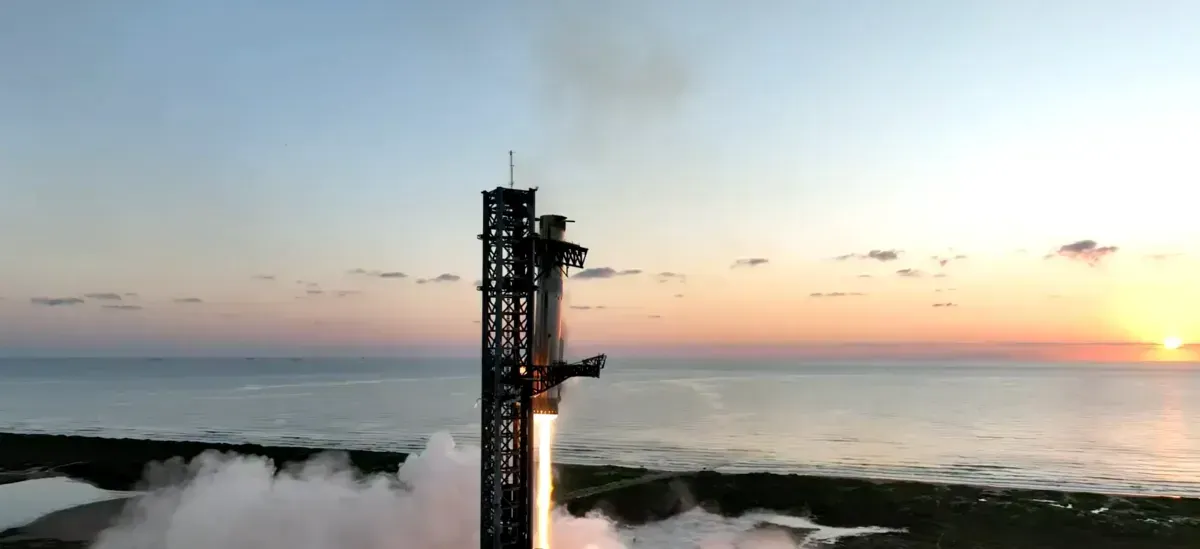
One of the most ambitious projects ever undertaken by SpaceX will launch one of them this year: refueling its Starship rockets in space by 2025. That could be a gigantic leap for the space industry and transform space exploration into a game of longer missions, deeper space travel, and perhaps the colonization of distant planets.
The dream of refueling spacecraft in orbit is decades old, but it has also been mainly an experimental exercise till now. Since long, SpaceX has been taking a lead in making this process routine and operational. Their next-generation spacecraft, Starship, designed to be used for missions to the Moon, Mars, and beyond, can result in significant extension of the rocket's reach and operational capabilities by refueling in space.
Rockets that exist today, like the Falcon 9 and Falcon Heavy, although launching into space, they are only capable of carrying on board just the fuel they carry themselves because the entire vehicle has to be lifted into orbit and delivered on their mission. Their range is severely limited by this and so are payload sizes. By refueling in space, Starship could be designed to be far more efficient, capable of longer missions without excessive carryover of fuel from Earth-a major cost and logistical hurdle.
Test missions, likely on Low Earth Orbit, would be the showcase of SpaceX to demonstrate the refueling process of the Starship prototypes. There is an aspect of docking: the tanker variant of the Starship rocket could then carry all the fuel that would be transferred over into the spacecraft. Probably even, cryogenic liquids, something rather complex to perform in zero gravity, and which is something that SpaceX will have to refine. The test mission will also tell how Starships can transfer fuel in a safe and efficient manner with minimum risks to either spacecraft.
That technology has the potential to be a stepping stone for other, even more ambitious plans-including possibly even lunar missions under NASA's Artemis program and crewed missions to Mars. If SpaceX realizes its ambition, refueling will likely play a critical role in the long-duration travel the mission would require, so today's announcement is an exciting step on the road to the first human landing on Mars.
Along with expanding the range of space flights, another additional economic value of refueling capability includes the prospect to make the economics of space travel better. With less reliance on Earth-based fuel depots, space travel will depend less, and it will dramatically cut interplanetary mission costs for the company. This will have made space accessible to both governmental space agencies and private companies.
This would be a landmark achievement for SpaceX in achieving its aim of establishing a sustainable space travel system. For years, the company has been centered on a concept of reusability and cost-cutting. And the refueling, above all, is something that would carry that philosophy to an altogether new horizon. As SpaceX continues to push what humans believe was impossible in space, this will take the prospect of humanity venturing further into space on a whole new trajectory.
Majors challenges range from technological to the dangers involved in docking and refueling in space, but SpaceX has always passed the test of being able to overcome some of the most complicated situations. In case the test becomes a success sometime next year, it might mark a new era of space exploration: after all, after refueling in orbit, astronauts will indeed explore space that has been less-explored before.