Sly Stone, Funk Pioneer and Vocal Icon, Dies at 82

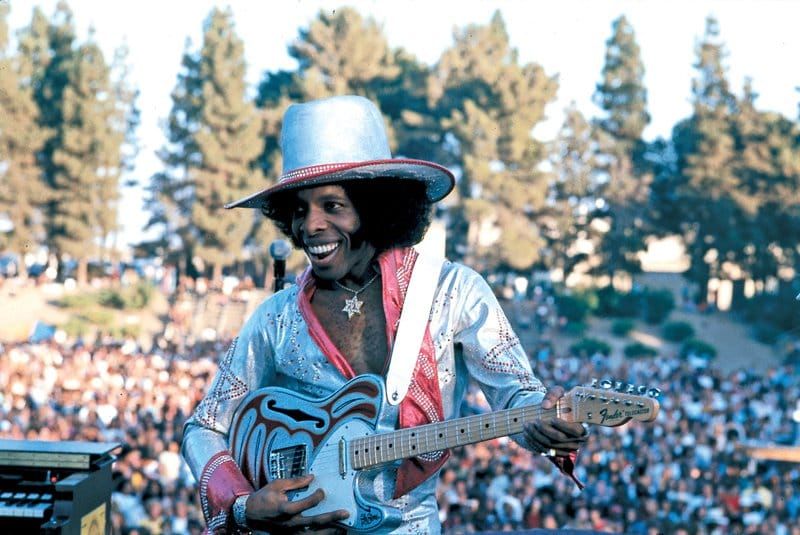
Sylvester “Sly” Stewart—better known to the world as Sly Stone—passed away peacefully in Los Angeles on June 9, at the age of 82. His family confirmed that his death followed a long battle with chronic obstructive pulmonary disease (COPD) and related health issues. Known not only for his electrifying performances, Stone was a musical innovator whose message of unity and social consciousness resonated far beyond his era.
Born in Denton, Texas, Stone's family relocated to Vallejo, California, during his adolescence. Raised in the Church of God in Christ, music became deeply rooted in his upbringing. At just eight years old, he and his siblings recorded gospel tracks as The Stewart Four, showcasing early signs of his extraordinary talent. A childhood nickname, “Sly,” coined from a playful misspelling of his full name, became his lifelong identity.
By age 11, Stone had mastered multiple instruments—keyboards, guitar, bass, and drums. In high school, he co-founded The Viscaynes, a racially integrated doo-wop group—a novelty at the time—recording several singles in Los Angeles. He later became a disc jockey at KSOL and Autumn Records, promoting both Black and white artists, demonstrating early on his commitment to musical diversity.
In 1966, Sly united three siblings—Freddie, Rose, and Vet—with backing musicians Larry Graham, Jerry Martini, Cynthia Robinson, and Greg Errico to form Sly & the Family Stone. This pioneering group was remarkable for its mix of Black, white, male, and female members, breaking social and musical barriers with soulful vocals and tight funk rhythms.
The group's debut album A Whole New Thing hit shelves in 1967, followed by breakthrough singles like “Dance to the Music”, “Everyday People”, “Family Affair”, and “I Want to Take You Higher.” Their sound blended funk, soul, gospel, rock, jazz, and Latin influences—a fresh sonic tapestry unmatched at the time. The band’s electrifying morning performance at Woodstock in 1969 became legendary, described by Stone in his memoir as feeling like a church engulfed by dawn-lit masses.
Stone’s later albums captured a shift in mood amid societal upheaval. There’s a Riot Goin’ On (1971) offered a darker, politically charged soundscape. Tracks like “Family Affair” reflected on grief, inequality, and the aftermath of the 1960s violence. His work influenced acts like Parliament-Funkadelic, Prince, Michael Jackson, and even jazz innovator Miles Davis.
By the 1970s, Stone’s relationship with drugs—cocaine and PCP—became well-documented, and his reliability faltered. Concerts were canceled or missed entirely. As bandmates recall, Stone’s erratic behavior strained their unity and public image .
This decline culminated in the band's breakup. Stone managed a solo career and sporadic ventures under the band's name, but none recaptured the magic of their early years.
Stone faded into seclusion in the 1980s and faced legal troubles, including a 2011 arrest for cocaine possession. Yet his Renaissance began in 1993 when he accepted induction into the Rock & Roll Hall of Fame, and in 2006 he made a surprise appearance at the Grammy Awards—his first performance in nearly two decades.
The 2017 Grammy Lifetime Achievement Award reaffirmed his cultural relevance. In 2023, he published a memoir, Thank You (Falettinme Be Mice Elf Agin), with a foreword by Questlove. This resurgence culminated in the release of the Questlove-directed documentary Sly Lives!
Stone’s family shared a heartfelt statement:
“After a prolonged battle with COPD […] Sly passed away peacefully, surrounded by his three children… While we mourn his absence, we take solace in knowing his extraordinary musical legacy will continue to resonate and inspire for generations to come.” facebook.com+2theatlantavoice.com+2pitchfork.com+2nprillinois.org+4npr.org+4theatlantavoice.com+4
They further noted that he had recently completed a screenplay adapting his memoir, which they look forward to sharing once finalized.
Stone’s groundbreaking fusion of race, gender, and genre left an indelible mark on pop culture and music. His hits—“Stand!”, “Hot Fun in the Summertime”, and “Dance to the Music”—not only dominated charts but also captured the optimistic spirit and social tension of their times.
Tributes continue from today’s artists: Questlove, George Clinton, Prince, and countless others acknowledge his pioneering fusion of styles and messages. Jazz and hip-hop movements also trace roots back to his inventive rhythms and grooves .
Sly Stone’s legacy transcends decades. He reshaped musical boundaries, united listeners across divides, and channeled cultural upheaval into rhythmic brilliance. Though his later years were marred by struggle, his early work remains a testament to his genius. As quotable powerhouses like “different strokes for different folks,” Stone championed diversity—sonically and socially.
His passing leaves a void, but his influence echoes on, inspiring artists and audiences worldwide. His life and art remind us that music can challenge, unify, and uplift—and that Sly Stone was one of its boldest champions.