Saturn's Rings: A Cosmic Illusion That Will Vanish from View in 2025
In 2025, Saturn's iconic rings will temporarily disappear from the view of ground-based telescopes, but they aren't going away for good. Here's why.

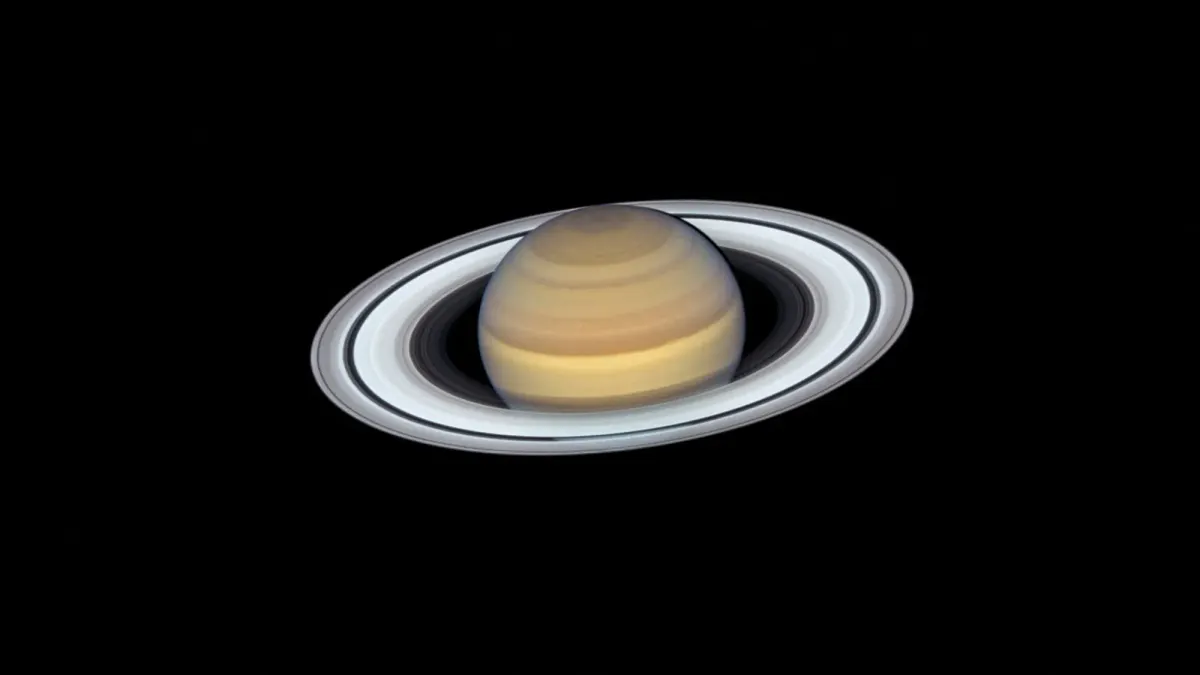
Saturn, the gas giant that dominates our solar system with its majestic and complex ring system, is a spectacle that has captivated astronomers, stargazers, and dreamers for centuries. Saturn's seven rings, composed of billions of icy chunks and space debris, have long been a symbol of celestial beauty. However, those who view the planet from Earth are in for a short-term shock. Starting in 2025, Saturn's fabled rings will be nearly invisible to ground-based telescopes. The reason is due to Saturn's orbit and the alignment of Earth.
Why Do Saturn's Rings Disappear?
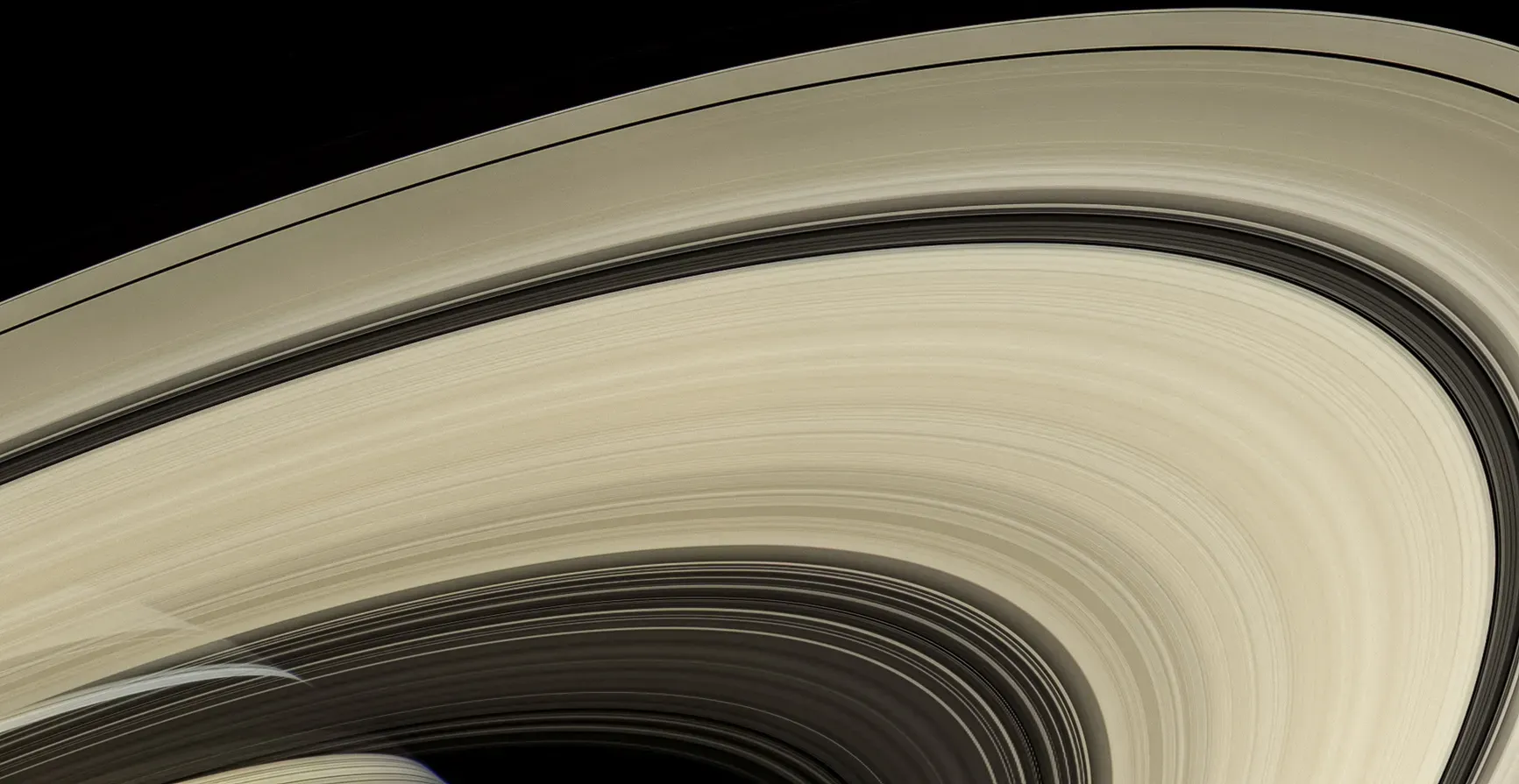
Saturn's rings are just magnificent, stretching up to 175,000 miles from the planet's surface, though they are incredibly thin, with the largest gap between them—known as the Cassini Division—measuring only 2,920 miles. These rings are made up of countless tiny particles of ice and rock, ranging in size from dust grains to large boulders. These probably come from fragments of asteroids or comets that were torn apart by Saturn's immense gravitational force. The rings are relatively young, likely formed about 100 million years ago, and yet already under the delicate balance of Saturn's gravity and the orbital motion of the particles in the rings.
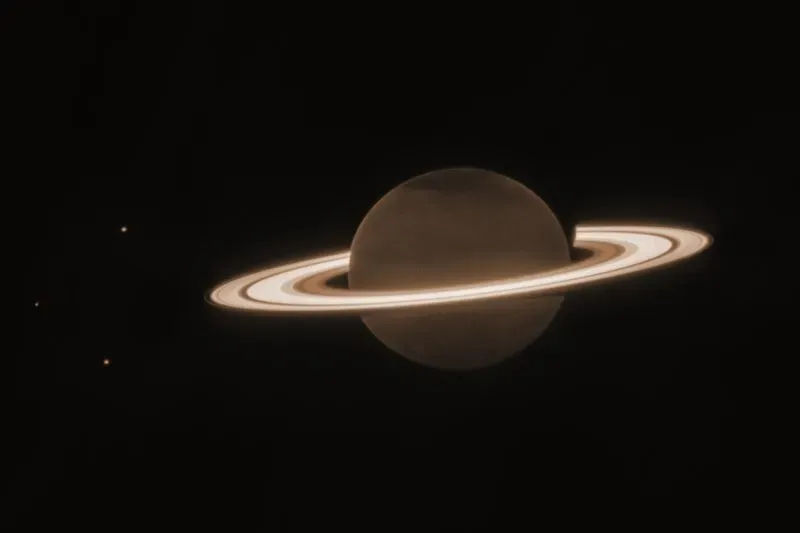
The reason the rings appear to disappear is related to the positions of Saturn and Earth in their orbits. Once every 13 to 15 years, Saturn is aligned so that the edge of its rings is facing Earth. This alignment makes the rings appear incredibly thin or even invisible from our perspective. This is an optical illusion: the rings aren't disappearing, but in a way, the lighting of them makes them appear hard to see. This "disappearing act" starts in 2025 when Saturn reaches this part of its orbit.
When Will Saturn's Rings Disappear?
Currently, astronomers and stargazers using ground-based telescopes are already viewing Saturn's rings as increasingly thinner and thinner. By March 2025, the rings will be completely invisible from Earth. This does not mean the rings will disappear; they will still be observable for spacecraft or high-powered space observatories. However, to most people on Earth, they will be unobservable both to the naked eye and through telescopes.
The rings will steadily once again become visible after March 2025, but again the rings will not display its full prominence until about 2032 when they will commence opening up once more as the giant planet Saturn continues its passage along its orbit. As Earth-bound observers wait on planet Earth, they will again see this gas giant be seen in this celestial fashion in the sky.
Beyond 2025—The Fate of Saturn's Rings
While Saturn's rings will reappear in the coming years, this brief period of invisibility isn't just a temporary nuisance—it serves as a reminder of the dynamic nature of the planet and its rings. In fact, Saturn's rings are undergoing changes that will ultimately lead to their slow disappearance. NASA’s Voyager 2 mission, which passed by Saturn in 1981, observed the planet’s rings and revealed that they were slowly being drawn into Saturn’s atmosphere. This process, known as "ring rain," is caused by the planet’s gravity pulling dust and ice particles from the rings into Saturn’s equator. In 2018, NASA released research based on the Voyager data that confirmed the rings were slowly vanishing.
Although this is so, scientists project that it will take approximately 300 million years for Saturn's rings to dissipate entirely. However, recent research conducted by NASA's Cassini spacecraft has indicated that the rings could dissipate sooner than expected. Cassini, which observed Saturn and its moons for over 13 years before its decommissioning in 2017, detected huge amounts of ring material falling into Saturn's atmosphere. Using this information, astronomers now believe to have updated their timeline with regard to when the rings will disappear, putting the loss of the rings possibly within the next 100 million years.
The Science of Saturn's Rings
Saturn's rings are amazing in several ways. They not only boast an incredible scale and grace but also contribute to scientists' understanding of the world. The primary composition is water ice, along with dust and rock. The ice particles making up the rings are often covered by cosmic dust, which tends to make them darker in color. The rings are not a single structure but are segmented into several regions, each distinct from the others. The Cassini Division is the biggest gap between two of Saturn's rings and is named for the Italian astronomer who discovered it in the 17th century, Giovanni Domenico Cassini.
The formation of Saturn's rings remains a topic of much debate among scientists. The most widely accepted theory is that the rings formed relatively recently in the planet's history, perhaps as the result of a comet or asteroid breaking apart under Saturn's gravitational pull. Alternatively, the rings may have once been a moon of Saturn that was destroyed in a collision with another space object. Whichever its origin, the rings of Saturn have now become one of the definitive features of this planet, drawing astronomers as well as the general public in.
Saturn's Rings and the Future of Space Exploration
Though Saturn's rings might be invisible to Earth's inhabitants for a few years, they will always be the most important target of the astronomers and the planetary scientists. Saturn's rings offer much information about the history of our solar system and forces in the universe. The Cassini spacecraft that orbited Saturn for over 13 years has provided a treasure trove of data on the rings, the moons, and the atmosphere of the planet. Cassini’s findings have revolutionized our understanding of the gas giant and its complex system of moons and rings.
One of the most important discoveries that Cassini made was on the complex interactions between Saturn's rings and its moons. These interactions are very important to understand how the rings could be maintained and why they were slowly dissipating over time. Cassini also observed that some of Saturn's moons, such as Enceladus and Titan, were in a constant state of flux due to their gravitational relationship with the planet and its rings.
The Cassini mission also supplied evidence of life beyond Earth. The spacecraft found the presence of hydrocarbon lakes on Titan, Saturn's largest moon, and discovered plumes of water vapor erupting from Enceladus, which indicates that there may be subsurface oceans beneath the icy moons. Such discoveries made scientists reimagine the possibilities of life in our solar system and beyond.
All humanity will keep exploring the cosmos. By then, Saturn and its rings will no longer be a destination for unmanned missions. These rings won't be seen by us for some time, but there will remain interesting messages in them about the workings of the universe. The rings of Saturn are set to disappear into space soon, thus reminding scientists that everything in the cosmos is changing and an integral part of the exploration of science.
Saturn’s rings are one of the most iconic features of our solar system, and their temporary disappearance from view in 2025 is just a brief chapter in the ongoing story of this fascinating planet. While the rings may be hidden from view for a short time, they will soon return to their full glory, providing us with yet another opportunity to marvel at the beauty of the universe. The science behind Saturn's rings and their eventual disappearance offers a fascinating glimpse into the dynamic processes that shape our solar system. Although the rings may disappear from view, they will continue to capture the imaginations of astronomers, scientists, and stargazers for generations to come.