Reconciliation in Tanzania is threatened by misinformation

Moving Tanzania forward after the recent period of unrest is not the sole responsibility of the government or Tanzanian activists. The international community must also recognise the pivotal role it plays in shaping affairs.
But instead, sensationalist comparisons between Tanzania’s current situation and similar incidents faced by neighbouring African countries in the past have been disseminated online.
This is to majorly downplay the lived experiences of the many Tanzanians that have been affected by the country’s recent challenges. Tanzanians do not just want their stories to be heard around the world; they want them to be listened to, engaged with, acted upon. Anything less is counterproductive in the much-needed stages of healing.
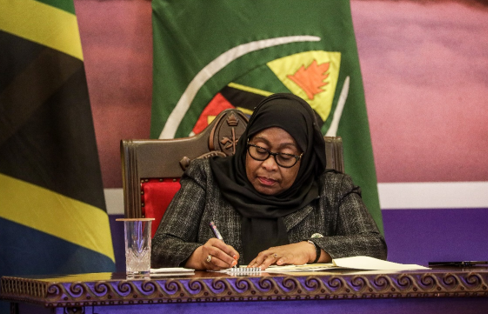
No one can deny that when Tanzania needed a response to scenes of violence, President Samia delivered.
In her address to Parliament on 14 November 2025, she took a firm stand and granted Tanzanians the voice they had been calling for. She unveiled her plans to the world to introduce the Commission for Mediation and Reconciliation. This inquiry, she pledged, would hold all those complicit in fuelling the unrest to account.
For weeks, international outlets portrayed Tanzania as a country destined to descend into total chaos. Tanzanians were waiting for someone to take the initiative on this matter, to pull the country out of the dark and back into the light.
Again, President Samia delivered. Her speech, calling for national healing, tugged on the patriotic heartstrings of both parliamentarians and civilians throughout the country. The stages of healing can only be achieved with unity, not fragmentation.
The President’s words made clear that there can be no place for harbouring anger, resentment or mistrust if the country is to fulfil its vast potential.
Media outlets must be mindful of how much influence they hold and seek to uphold journalistic integrity to not mislead the public.
Stories on the unrest have continuously been riddled with exaggerations. Take CNN’s ‘October 29th Protest Report’ as an example. Protests are said to have lasted “one whole week”, yet no evidence is provided to suggest that this is true.
Similarly, election day itself had been described as “a bloody scene across the country”. Such accounts are erroneous given that the vast majority of Tanzanians voted across the country’s thousands of polling stations uninterrupted.
In addition, CNN labelled the elections “unfair” whilst ballots were open, and votes were still being cast.
The realities on the ground, therefore, bear very little resemblance to the cataclysmic descriptions circulating online. These examples merely scrape the surface of the inaccuracies being disseminated but prove that when Tanzania was longing for water to contain its fires, the foreign media were determined to add fuel.
Individuals rarely take the time to question the validity of what they read online and the legitimate concerns of the Tanzanian people are being overlooked to make way for false claims and speculation being made from afar.
The stages of healing are defined by both patience and trust. They involve verifying facts, not assuming; engaging with locals, not relying on guess work; committing fully to driving Tanzania forward through actions, not just words.
One must look no further than President Samia as an illustration of this. While there is still work to be done in putting the Commission into practice and seeing how well people receive these consistent calls for reconciliation, she is taking the strides needed for Tanzania to emerge from this phase stronger and more united than it ever has been.