Ozzy Osbourne in New Zealand: Calm, Jovial, and One Wild Demand

In January 1973, Black Sabbath—led by its charismatic frontman Ozzy Osbourne—made a powerful entrance at New Zealand's Great Ngāruawāhia Music Festival. While the band carried a reputation for being fierce and unpredictable, festival promoter Barry Coburn recalls a surprisingly subdued and friendly presence. Despite the rocker's edgy public image, Ozzy arrived calm, approachable, and keen to connect with the Kiwi audience.
The Unusual Request
Yet, behind his laid-back demeanor lay a flair for dramatic showmanship. Just hours before their midnight set, Coburn received an unexpected call from Ozzy himself. The singer asked for a massive burning cross to be erected and set ablaze on the hillside right when the band hit the stage—an eerie, unforgettable visual to echo their heavy metal roots. Coburn and his crew scrambled to build the contraption using wood, wire, and petrol‑soaked rags. As Black Sabbath launched their set, the burning cross illuminated the night, setting the perfect stage for their haunting music.
Beyond the Persona: A Friendly Presence
Coburn was struck by how genuine and lighthearted Ozzy was behind the scenes. He described the frontman as calm and jovial, noting that the band caused none of the chaos sometimes attributed to rock tours. Contrary to the myth of wild destruction, Coburn didn’t witness any damage, nor did Ozzy or his bandmates behave recklessly. They were simply “decent young English guys,” enjoying their time in New Zealand.
Cementing Heavy Metal Legacy
That performance marked Black Sabbath's first appearance in New Zealand, and Coburn believes the band’s impact still resonates. He regularly sees fans donning the band's tees and hears Sabbath tunes playing live at shows. Their influence on heavy metal and hard rock, he says, remains as vibrant today as it was in the early ’70s.
Personal Memories and Reflections
Local music commentator Marty Duda shared how discovering Sabbath’s “Paranoid” changed his teenage life, describing hearing it on a cassette at scout camp as transformative: “it changed everything—blew my mind." He highlighted the powerful combination of Ozzy’s voice and Sabbath’s songwriting as the spark that ignited the metal movement in New Zealand.
Promoters across the country also praised Ozzy’s professionalism. One noted how Sharon Osbourne, wielding both managerial and maternal influence, kept Ozzy away from guitarist Zakk Wylde to protect his sobriety during a Wellington tour stop. It perfectly illustrated his image as both a hard-living rocker and a family man under careful watch.
A Final Curtain Call
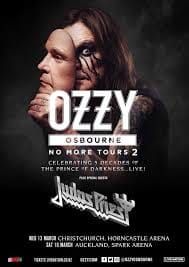
This kiwi encounter took on added significance when Ozzy passed away just weeks after Black Sabbath’s final farewell concert in Birmingham. Coburn reflected on how poignant it was that, two weeks post the farewell shows, Ozzy had died. His final NZ request—dramatic, theatrical, and bold—captured the essence of his unique persona. Coburn remarked, “He was this iconic figure… there’ll never be another Ozzy Osbourne”.
Remembering the Man Behind the Myth
Ozzy Osbourne is often remembered for shock-rock antics and dark theatrics—but moments like the Ngāruawāhia Festival reveal another side: a man who knew how to entertain but was also grounded, friendly, and genuine with those around him. His bold request for the burning cross may have defined Sabbath’s stage presence, but his real legacy lies in how he inspired fans and shaped an entire musical genre. His influence remains alive wherever heavy metal echoes—and especially here in Aotearoa.