Musk’s Efficiency Department Cuts $900 Million from Agency That Tracks US Students' Academic Progress
A federal research office tracking America’s students is facing nearly $900 million in cuts, following an efficiency review by Elon Musk’s Department of Government Efficiency. The move has sparked concerns over education accountability and data transparency.

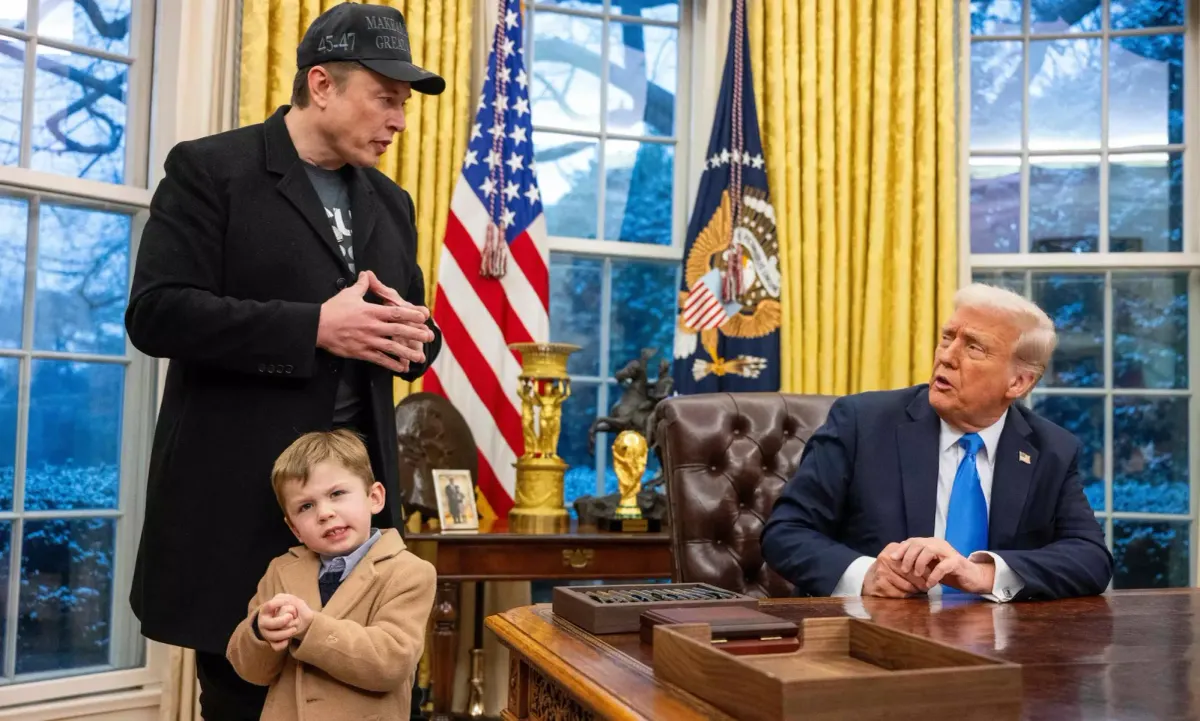
The Institute of Education Sciences (IES), the federal organization in charge of monitoring children' academic achievement in the US, has seen a nearly $900 million budget cut by Elon Musk's Department of Government Efficiency (DOGE) in a dramatic decision that has generated national discussion. There are concerns regarding the future of education research and accountability in light of this decision, which resulted in the sudden termination of 169 contracts.
The Range of the Reductions
These cuts have had a significant impact on several of IES's ongoing programs. Advocates and education experts contend that the loss of funding will seriously impede the collection and analysis of vital education data, despite the Department of Education's claims that key programs like the College Scorecard and the National Assessment of Educational Progress (NAEP) will continue.
DOGE used the fact that many of the IES contracts were superfluous or redundant as justification for the decision. The cuts included $101 million for 29 diversity, equality, and inclusion (DEI) training programs and $1.5 million for contractors in charge of overseeing clerical operations at a postal center, according to a DOGE social media post.
Responses from the Educational Field
Legislators, education activists, and scientific organizations have all strongly opposed the decision.
Statement of the Education Trust
The action was condemned by the nonprofit research and advocacy organization The Education Trust, which said that IES delivers more than simply statistics; it also offers important insights into educational disparities and ways to improve student outcomes. In a statement, the group stated, "Without it, we are left in the dark, unable to see where educational gaps exist or how to close them."
Research Associations' Concerns
In a joint statement, the Council of Professional Associations on Federal Statistics (COPAFS) and the American Educational Research Association (AERA) called for the contracts to be reinstated. They emphasized that IES depends on contracts to operate efficiently and that a large portion of its research is required by Congress. "Without such research, student learning and development will be harmed," the statement cautioned.
Political Reaction
Former educator and Democratic Senator Patty Murray, who serves on the Committee on Health, Education, Labor, and Pensions, promised to oppose the cuts. She called Musk's involvement in government decision-making a "wrecking ball" for education research and opposed it. "An unelected billionaire is now bulldozing the research arm of the Department of Education, undermining high-quality research and essential data collection," she said.
Consequences for Educational Policy
The changes could have a significant impact because IES is essential to education research. Among the major areas impacted are:
Monitoring Student Performance: The institute's studies on changes in student success, especially learning losses following the epidemic, are under jeopardy.
Federal Program Evaluations: To evaluate the efficacy of educational policies and initiatives, schools turn to IES research.
International Comparisons: The United States' involvement in the Program for International Student Assessment (PISA) may decline, which would limit our understanding of academic competition around the world.
Musk's Department of Government Efficiency's Function
The mission assigned to Elon Musk's DOGE is to find inefficiencies in all federal agencies. Some believe that funding cuts to education research are short-term cost savings at the expense of long-term policy effectiveness, while others applaud the move for cutting government waste.
According to reports, the White House is thinking of reorganizing the Department of Education even more, which might involve eliminating more programs. In the past, former President Donald Trump has called for the department to be abolished entirely and for states and local districts to regain authority over education.
What Happens Next?
Congressional Pushback: It is anticipated that lawmakers, including Senator Murray, will contest the reduction and look for legislation to restore funds.
Legal Difficulties: Advocacy organizations may sue to reestablish contracts, claiming that a large portion of IES's activity is required by Congress.
Possible Workarounds: Private research organizations and nonprofits might try to cover the shortfall if federal funding is permanently cut, albeit on a much smaller scale.
Frequently Asked Questions (FAQ)
What is the Institute of Education Sciences (IES)?
IES is a federal research agency within the Department of Education that collects and analyzes data on U.S. students' academic progress. It administers programs like NAEP and provides research on effective education practices.
Why did Musk's Department of Government Efficiency cut $900 million from IES?
DOGE claimed that many of IES’s contracts were redundant or unnecessary, identifying inefficiencies in spending. The decision was part of a broader effort to reduce government expenditures.
How will these cuts impact students and educators?
The cuts could limit the availability of essential research on student achievement, school performance, and education policy effectiveness. This could make it harder for educators to address learning gaps and improve student outcomes.
Can Congress reinstate the funding?
Congress has the authority to allocate funding to federal agencies, and lawmakers opposing the cuts may introduce legislation to restore IES’s budget. However, political dynamics will determine whether such efforts succeed.
What are the long-term implications of these cuts?
If the cuts remain in place, education policymakers may have less reliable data to guide decision-making. This could affect school funding allocations, curriculum development, and interventions to close learning gaps.
The decision to slash IES funding by nearly $900 million has ignited a debate about the role of education research in federal policy. While proponents argue the cuts eliminate inefficiencies, critics warn that the move threatens the accountability and effectiveness of U.S. education. The coming months will determine whether Congress, advocacy groups, or legal challenges can reverse or mitigate the effects of these drastic reductions.