Meta Denies Forcing Users to Follow Trump Administration Accounts
Meta denies claims of forcing users to follow Trump-related accounts, explaining that the new White House accounts were automatically updated to reflect official positions, similar to past presidential transitions.

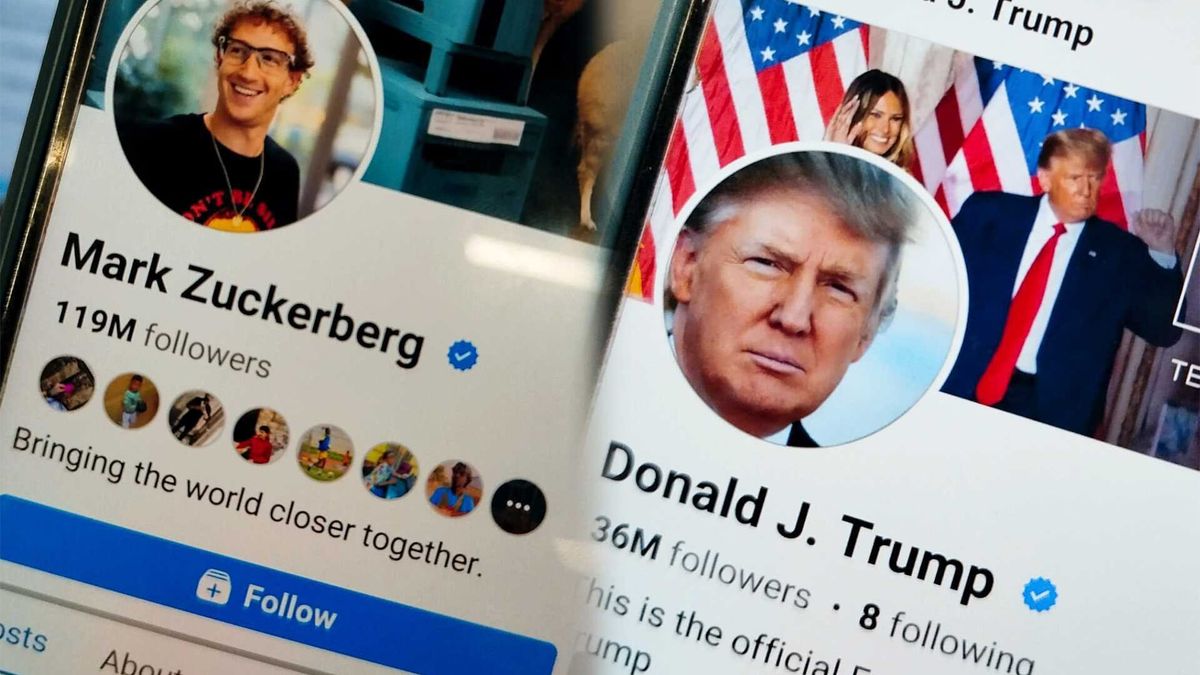
Meta-the parent company that owns Facebook and Instagram-has flatly denied charges that it's forcing users to follow official accounts pertaining to the administration of former president Donald Trump. This controversy arises after some users complained of having "automatically" been added to new accounts associated with the White House in displaying newly updated President Donald Trump's profiles, Vice President JD Vance, and First Lady Melania Trump. Meta spokesperson Andy Stone clarified that these accounts, such as Potus (President of the United States), VicePresident, and Flotus (First Lady of the United States), were simply updated to reflect the new officeholders following Trump's inauguration.
In the statement provided by Stone, he emphasized that this process was consistent with how Meta handled similar transitions in the past, particularly after President Joe Biden’s inauguration. These accounts' official portraits and names updated the change in the leadership, for example, from Joe Biden and Jill Biden to Donald Trump and Melania Trump. Included in the update may be some time the system takes to recognize follow and unfollow requests.
Meta's Explanation: Standard Procedure During Transitions
Being one of the world's largest social media companies, Meta is entrusted with the management of large-scale changes during U.S. presidential power transitions. The company reported that this transition was managed similarly to previous presidential transitions, such that official accounts, including the president and first lady, are updated to reflect the new leadership. This is something that Facebook has been claiming since its earliest stages, which boasted of making any official information publicly accessible.
Andy Stone calmed users that it was not a ploy to force any political agenda, neither was it a step to "force" people to follow these accounts. It is rather a procedural update to reflect changes in the governance of the United States. The changes were not aimed at swaying opinions but ensuring that users were kept abreast of the new administration.
User Complaints and Backlash
With such clarification by Meta, many complained of being 'unknowingly pushed' to the updated accounts, which explains part of this growing backlash. After all, within the overall and broader landscape of heightened political sensitivities on social media, political discourse on both Facebook and Instagram has faced enormous attention for shaping this discourse and also for moderation on the same sites. With the election of Donald Trump to the presidency for the second time, the spotlight on these platforms intensified.
However, tension had also marred the previous relationship of Trump with Meta. The former president had been barred from Facebook and Instagram by Meta following the January 6 riots at the U.S. Capitol over inflammatory comments held to have incited violence. The former president's accusations of censorship against Meta and other tech companies, particularly in the lead-up to the 2020 election, only further heightened animosity between him and the social media company.
The Trump-Zuckerberg Relationship: A Shift in Dynamics
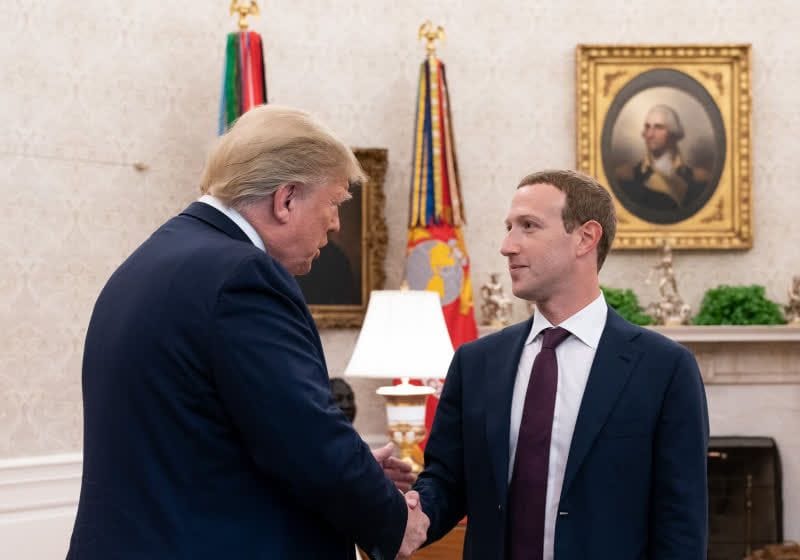
Since the 2020 election, Mark Zuckerberg, the CEO of Meta, has had a highly altered relationship with Donald Trump. After the electoral victory of Trump in November 2024, it was reported that Zuckerberg and Trump had renewed relations as Zuckerberg reportedly dined with Trump at his Mar-a-Lago residence. But Zuckerberg donated a significant amount of money of $1 million to support Trump's inauguration. This is a marked change in tone for Meta, taking into account how Trump previously roasted the company.
The relationship between Zuckerberg and Trump turned particularly hostile during the 2020 election cycle, when Trump's supporters accused Meta of suppressing reports regarding Hunter Biden's controversial business dealings and the wider political implications of the Covid pandemic. Trump even expressed his desire for Zuckerberg to be imprisoned for his involvement in the 2020 election's social media dynamics.
However, in the context of Trump's reinstatement as president, the overtures by Zuckerberg to him indicates an effort to recenter relations. It is believed that Zuckerberg recognizes that he needs to align himself with the new administration and that his approach should now be one of conciliations, considering that Meta's new policy direction in ending third-party fact-checking and instead relying more on user-driven content moderation similar to X's community notes.
Meta's Policy Changes and Contention with Free Expression
Earlier this month in January 2025, Meta announced that it would cease third-party fact-checking services on its platform. The company will adopt a community-driven approach to content moderation, although it looks and feels very much like X, previously Twitter. This is widely interpreted as Meta's reaction to Trump's repeated slamming of the company's moderation practices over the last few years, particularly in politically sensitive materials.
Meta has described this shift as a return to its "fundamental commitment to free expression." The move to end third-party fact-checking is in line with Meta's effort to balance its social responsibility with the need for user-generated content and a broader scope of free speech. This new policy reflects the company's strategy to regain the trust of conservative users, who have accused the platform of bias in the past.
Trump’s Political Moves and Meta’s Role
Following his inauguration, Trump immediately set to work issuing executive orders aimed at furthering his political agenda. From withdrawing the U.S. from the World Health Organization to declaring a national emergency at the Mexican border, Trump’s early days in office were marked by significant shifts in policy.
His political moves did not go without notice from Meta and other technology companies, as they are aligning themselves to his resurgence leadership. This is despite his strained relationship, but it remains evident that interaction between Meta and Trump has shifted to a strategic level, more so as Meta continues to modernize its practices on content moderation.
The Role of Tech Billionaires in Trump's Administration
Apart from Zuckerberg's relation with Trump, there are several other well-known tech personalities taking place in Trump's administration. These include Elon Musk, a highly visible player whose involvement, particularly through his advisory position and his ownership of X, makes the convergence of politics and social media even more complex. The presence of Musk in the Trump administration signals a deepening relationship between the technology and political spheres, especially as companies navigate the changes in free speech and political discourse.
FAQ Section
What did Meta say about being forced to follow Trump accounts?
Meta said that nobody was "forced" to follow accounts related to Trump. The accounts, including President and First Lady, were updated because it reflected the new officeholders and was based on the process of previous presidential transitions.
Why did users express resentment about automatically being followed by Trump accounts?
Some users got frustrated because they felt they had been automatically following official White House accounts without consent. Meta cleared the air saying it was part of an update to reflect the new administration's leadership.
Did Meta's relationship with Trump change after the 2020 election?
Yes. In the aftermath of Trump's victory in 2024, Mark Zuckerberg appeared to bury the hatchet with the president: he went to dinner at Mar-a-Lago and donated a significant amount toward Trump's inauguration.
What did Meta change in its approach to content moderation?
Meta announced it was ending third-party fact-checking and reverting to a community-driven model for content moderation, just like X. The change is part of Meta's effort to align with free expression principles and address user complaints.
What does Meta's new policy mean for users?
Meta is now looking into a new policy that would give more room to user-driven content while lessening dependence on third-party fact-checking. The transition is likely to give users a freer ability to express themselves since the company insists that it supports free speech.