Medusa: The Bold Brazilian Horror-Satire That Will Leave You Speechless


Medusa: A Bold, Unnerving Horror-Satire That Exposes Extremism
A Shocking Look at Purity Culture Turned Violent
The opening moments of Medusa set the tone immediately. The first word spoken? A vicious insult: “slut.” The first song? Siouxsie and the Banshees’ eerie “Cities in Dust.” From the very start, writer-director Anita Rocha da Silveira makes it clear—this movie isn’t here to play nice.
Medusa takes us into the world of an extreme evangelical girl gang in Brazil, a group obsessed with enforcing their twisted idea of purity. By day, they’re devout students and members of a megachurch choir called the Treasures of the Lord. By night, they don masks and hunt down women they believe have sinned, attacking them in the name of righteousness.
It’s a chilling, thought-provoking film that blends horror, satire, and social commentary, exposing the dangers of religious extremism, patriarchal control, and gender-based violence.
The Plot: A Religious Cult Hiding in Plain Sight
A Girl Gang on a Mission
The story follows Michele (Lara Tremouroux) and her loyal second-in-command Mari (Mari Oliveira), leaders of the Treasures. Their job? To uphold the church’s strict moral code—by any means necessary.
Their world comes crashing down when Mari is attacked during one of their missions, leaving a scar on her cheek. Though barely visible, this imperfection makes her an outcast in a society that values beauty and purity above all else. She loses her job at a plastic surgery clinic and is pitied by friends who now see her as undesirable.
Seeking the Truth About Melissa
Mari’s injury sparks something inside her—doubt, curiosity, maybe even guilt. She becomes obsessed with Melissa (Bruna Linzmeyer), a local actress who was brutally disfigured by the Treasures for starring in a nude scene.
Rumors swirl that Melissa is hidden away in a nearby hospital, alongside victims of the Watchmen—the male version of the Treasures, who beat gay men into comas in the name of their faith. As Mari digs deeper, she starts questioning everything she’s ever believed.
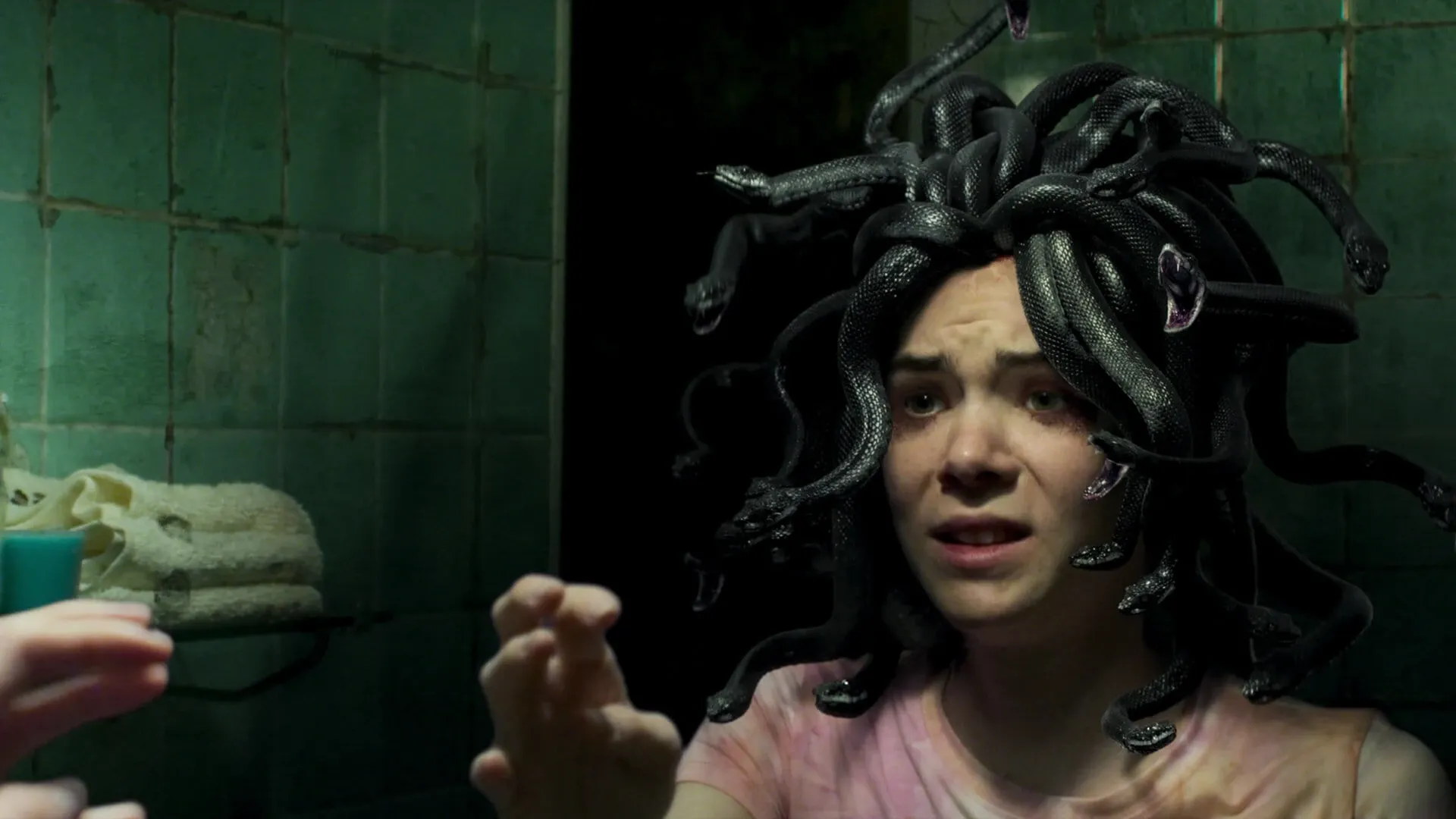
A Visually Stunning Nightmare
A Mix of Horror, Satire, and Neon-Drenched Chaos
Director Anita Rocha da Silveira draws inspiration from legendary horror filmmakers like Dario Argento and Brian De Palma. The result? A film that feels like a mix of Suspiria, Carrie, and Heathers—but with a voice all its own.
Bright, girlish pinks and neon lights contrast against the film’s brutal violence, creating a dreamlike atmosphere that slowly turns into a nightmare. From the Treasures’ carefully curated makeup tutorials to the men’s perfectly choreographed gym workouts, every scene is dripping with satirical perfection.
The soundtrack is just as important. The eerie choir songs, the haunting 80s-inspired score, and the dark pop culture aesthetics make Medusa feel like a surreal fever dream.
Themes: What Medusa Really Means
1. The Danger of Religious Extremism
At its core, Medusa is a powerful critique of ultra-conservative purity culture. The Treasures believe they’re serving God, but their actions are driven by misogyny, violence, and control, rather than faith. The film highlights how dangerous it is when religion is weaponized against women and marginalized groups.
2. The Obsession with Beauty and Perfection
Mari’s scar symbolizes something bigger—it’s a crack in the illusion of perfection. In a world where women are only valued for their beauty and purity, any imperfection makes them disposable. Medusa exposes the toxic beauty standards that force women to conform to impossible ideals.
3. Female Rage and Rebellion
As Mari begins to break free from the Treasures, we see a shift—her rage, her pain, and her desire for revenge all build to a powerful climax. Medusa isn’t just about the horrors of oppression—it’s about the fight to break free from it.
Flaws: Where Medusa Stumbles
An Overlong Runtime
At over two hours, Medusa can feel stretched out, especially in its final act. The tension that builds so masterfully in the first half starts to lose momentum. While the film’s themes are strong, it occasionally struggles to find a satisfying resolution.
Not for the Faint of Heart
This is not an easy film to watch. The violence, psychological horror, and themes of abuse can be deeply disturbing. If you’re looking for a light horror flick, Medusa might not be for you.
Why You Should Watch Medusa
Still on the fence? Here’s why Medusa deserves a spot on your must-watch list:
. A bold, thought-provoking story that challenges religious and societal norms
. Visually stunning cinematography that blends horror with pop culture aesthetics
. A killer soundtrack that adds depth and intensity to every scene
. A gripping lead performance from Mari Oliveira
. A unique horror film that’s as disturbing as it is unforgettable
If you’re a fan of psychological horror, feminist cinema, or thought-provoking thrillers, Medusa is a film you won’t want to miss.
A Horror Movie with a Powerful Message
Medusa isn’t just another horror movie—it’s a terrifying reflection of real-world issues. It shines a light on the dangers of extremism, the pressure of perfection, and the violence used to control women.
Though it has some pacing issues, its bold visuals, intense themes, and powerful performances make it a must-watch for horror fans looking for something deeper.
Brace yourself—this is one film that won’t leave your mind anytime soon.