Joy: The Untold Story of Three British Scientists Who Paved the Way for IVF
Joy" uncovers the inspiring journey of three British scientists who braved all odds in the 1960s and 70s to develop the in-vitro fertilization technique, changing the world of reproductive medicine forever.

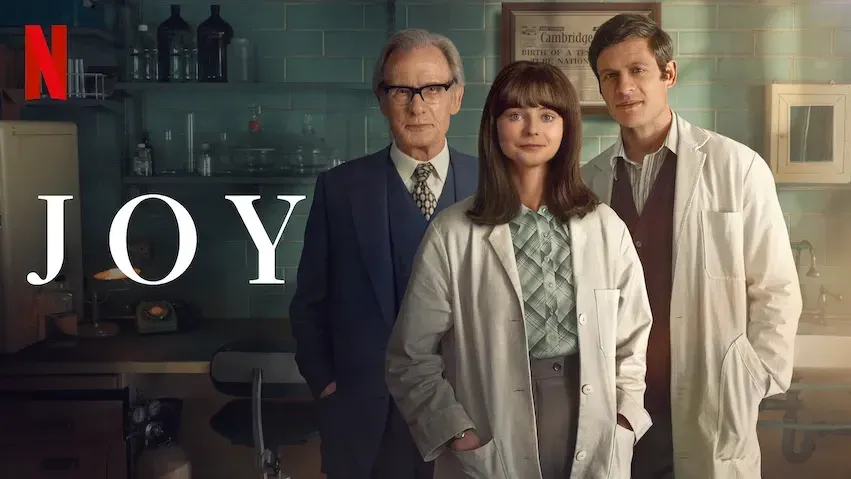
Set to hit theaters on November 22, "Joy" is the true story of three British scientist whose pioneering work in the 1960s and 70s changed the course of human history through developing in-vitro fertilization (IVF), which can change the lives of millions around the globe. This is a drama based on actual events where the challenge these scientists had in trying to develop what seemed impossible at their time-however, to conceive outside the human body-is brought to life. But most importantly, at the heart of "Joy" is the dedication and tenacity of scientists to be withstood during a time when the possibility of artificial conception was met with skepticism, ridicule, and even hostility. IVF was largely unheard of in the 1960s and the medical and social worlds argued about its moral implications.
The movie "Joy", loosely based on Dr. Robert Edwards, Dr. Patrick Steptoe, and Jean Purdy, the actual pioneers who discovered IVF, experiences some of the world's greatest obstacles-from religious scorn to political and financial barriers, all while trying to find his or her place in the scientific community. Edwards, Steptoe, and Purdy's journey was not just a scientific one but to reach millions of couples struggling in a hopeless manner. The options before them did not provide hope for success, and their whole lifetime may have been wasted in infertile desperation. While they continued with experiments and lab trials without end failure, their isolation at the workplace, which put them under so much pressure from public scrutiny as well as internal doubt, makes it all the more impressive when it was led by Edwards. For Edwards, at least, it was a mission born of compassion and a vision of a future when childless couples could find joy and fulfillment through science. "Joy" embodies the very principles of collaboration and resilience that IVF needed to be done.In the film, it emphasized that personal sacrifices by each of the scientists became necessary—sacrifices extending into personal lives and relationships. Pursuing such a revolutionized advancement entailed the burden of being pioneers in uncharted waters, and every step was set to become a daunting challenge.
The fruit of this work appeared in the magnificent moment: when, in 1978, the first "test-tube baby" in the world was born - Louise Brown - a period that confirmed all the decades of stubborn endurance and transformed medical science. Beyond its historical and scientific narrative, "Joy" also stands as a poignant testament to the power of perseverance and of the human spirit. In nuanced performances and within a careful retelling of the historical, the film asks its audience to ponder how courage and conviction can have a huge impact in the face of insurmountable obstacles. It reminds one that behind every great scientific breakthrough lies someone willing to risk everything for something greater than oneself.
"Joy" is a tribute not only to the revolutionaries that changed reproductive medicine, but also to the thousands of families whose lives are forever altered because of it. With clever thoughtfulness of history and emotion, "Joy" promises to be an emotional cinematic experience: a celebration of scientific legacy, but also an ode to the emotion-stirring power of IVF, that omnipresent ray of hope that sends families across the globe into new promises of life.