Inside the Trump-Putin Alaska Summit: Key Takeaways from a High-Stakes Meeting

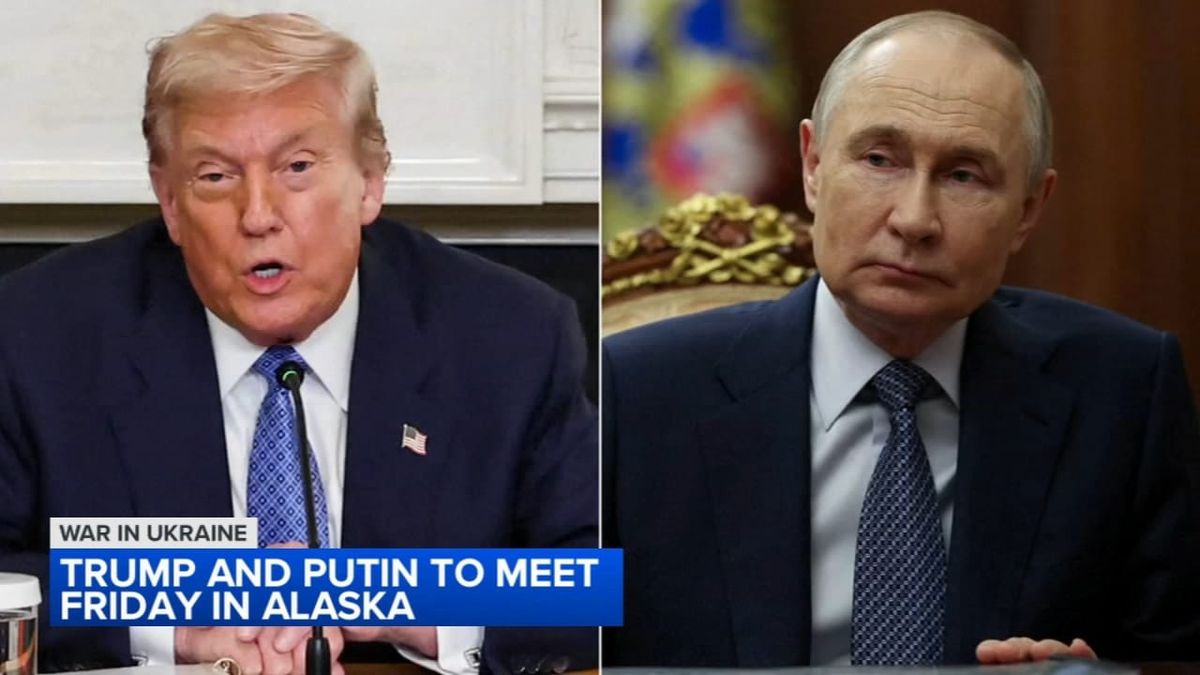
When former President Donald Trump met with Russian President Vladimir Putin in Anchorage, Alaska, the world turned its gaze to the remote American state. This was no ordinary diplomatic encounter. The event marked their first face-to-face meeting since Trump returned to political prominence, and it unfolded against the backdrop of global tensions, shifting alliances, and skepticism from both Washington and European capitals.
The choice of Alaska was symbolic. Close to Russia geographically, it became a stage for discussions that touched on international security, the war in Ukraine, energy markets, and the evolving relationship between the United States and its rivals. What emerged from the summit was not a groundbreaking peace treaty or a dramatic reversal in foreign policy, but rather a series of revealing moments that offered a window into Trump’s worldview and his approach to one of America’s most enduring adversaries.
A Different Kind of Setting
Unlike the carefully choreographed diplomatic summits of the past, this meeting was characterized by informality and spectacle. Trump and Putin were seen sharing moments that blurred the lines between statesmanship and political theater. For Trump, it was an opportunity to showcase his brand of diplomacy: direct, unfiltered, and often controversial. For Putin, it was a chance to signal Russia’s resilience on the global stage while reminding the world that Moscow remains a player Washington cannot ignore.
Critics immediately pointed out that the summit leaned more toward pageantry than policy. Yet supporters argued that direct engagement, even without concrete agreements, could reduce hostility and create channels for dialogue. The setting in Anchorage underscored this point—it was less about the grandeur of global capitals and more about projecting an image of accessibility and blunt conversation.
Ukraine: The Issue That Couldn’t Be Ignored
At the heart of the discussions was the ongoing war in Ukraine. Putin has sought to reframe the conflict as a regional matter, while Trump has long questioned the scale of U.S. involvement in supporting Kyiv. During the summit, Trump stopped short of promising an immediate change in U.S. aid, but his tone suggested a willingness to reconsider America’s commitments if he were to regain power.
This position unsettled NATO allies, who view U.S. backing as essential for Ukraine’s survival. European officials, already wary of Trump’s transactional approach to alliances, expressed concern that his rhetoric could embolden Moscow and weaken the West’s united front. Putin, on the other hand, seemed eager to exploit these divisions, presenting himself as a leader open to negotiation while casting doubt on Western resolve.
Energy, Sanctions, and Economics
Another focal point was energy policy and the economic strain of sanctions. Russia’s economy has been battered by Western restrictions, yet its oil and gas exports remain lifelines that sustain both its war effort and its influence abroad. Trump signaled that he believed the current sanctions regime had failed to bring Russia to its knees and hinted that a new strategy might be needed.
For Putin, this was an opening to argue that the West’s approach was counterproductive, harming global markets while strengthening alternative partnerships between Moscow, Beijing, and parts of the Global South. Energy analysts noted that the summit highlighted a fundamental difference between Trump and the Biden administration: where Biden emphasized long-term support for Ukraine and strict sanctions, Trump leaned toward pragmatism and questioned whether economic penalties achieved their intended goals.
NATO Allies on Edge
Perhaps the strongest reverberations from the summit came not from Washington or Moscow but from European capitals. NATO members watched closely, worried about Trump’s longstanding criticism of the alliance. His comments in Alaska suggested once again that he sees NATO less as a strategic necessity and more as a financial arrangement that should be renegotiated.
This unsettled leaders in Eastern Europe who fear that any weakening of NATO could embolden Russia to expand its aggression. Diplomats privately admitted that even the perception of American ambivalence undermines deterrence. At the same time, Trump’s supporters argue that pressing allies to contribute more financially is not abandonment but rather an overdue correction in global burden-sharing.
The Optics of Personal Diplomacy
Beyond policy, the summit highlighted Trump’s signature reliance on personal relationships. He described his rapport with Putin in glowing terms, suggesting that strong leaders could cut through bureaucratic inertia to strike deals. This emphasis on chemistry over structure is both his strength and his vulnerability.
Critics contend that such an approach allows autocrats like Putin to manipulate narratives and secure concessions without making real compromises. Supporters counter that traditional diplomacy has failed to resolve major conflicts and that bold, unconventional engagement might yield results where caution has not. The summit’s optics—handshakes, friendly banter, and moments that bordered on camaraderie—were carefully crafted to reinforce Trump’s image as a dealmaker who defies norms.
A Divided Reaction at Home
Back in the United States, the summit triggered sharply divided reactions. Trump’s allies hailed it as proof of his ability to command the world stage and open lines of communication that others fear to cross. They portrayed him as a realist willing to prioritize American interests over ideology.
His critics, however, saw the meeting as another example of his willingness to flatter authoritarian leaders while downplaying the importance of democratic alliances. They accused him of sending mixed signals at a time when clarity and resolve are vital. The domestic debate mirrored the larger split in American politics—between those who see engagement with adversaries as pragmatism and those who view it as capitulation.
No Breakthroughs, But Many Signals
Ultimately, the Alaska summit did not produce dramatic agreements or policy shifts. There were no signed deals, no ceasefires announced, and no sweeping economic changes revealed. But it did send signals—about Trump’s priorities, Putin’s strategy, and the fragile state of international order.
For Trump, it was an opportunity to contrast himself with President Biden, presenting an image of toughness mixed with flexibility. For Putin, it was a chance to show his people and the world that Russia remains in dialogue with the United States despite sanctions and isolation. For the global community, it was a reminder that the future of U.S.-Russia relations—and by extension, much of global security—remains uncertain.
Looking Ahead
The Anchorage summit may be remembered less for its substance and more for what it revealed about the political landscape. It underscored Trump’s willingness to challenge long-standing foreign policy norms and Putin’s determination to outlast Western pressure. It also highlighted the anxieties of allies caught between fear of Russian aggression and doubt about America’s reliability.
Whether the meeting leads to tangible outcomes or simply sets the stage for further debate will depend on events in the coming months. But one thing is clear: the Trump-Putin encounter in Alaska reinforced the idea that diplomacy in the 21st century is as much about narrative and perception as it is about treaties and agreements.