Gladiator II: The Return of Rome's Glory – A Tale of Vengeance and Redemption
In "Gladiator II" Lucius returns to the Colosseum, fueled by vengeance and driven by honor, as he fights against powerful emperors in a battle for reclaiming freedom and justice in the empire.

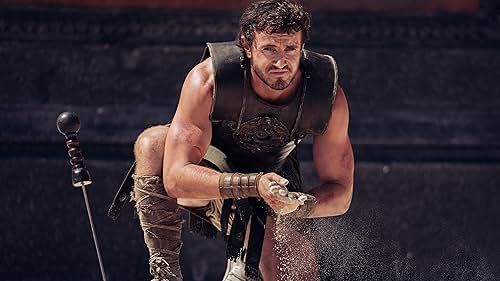
In "Gladiator II", Ridley Scott re-ignites the epic spirit of ancient Rome in another compelling new story that goes to the depth of revenge, honor, and legacy, set years after the tragic death of Maximus. The movie follows Lucius-the now grown-up son of Lucilla, who had already seen with his own eyes the brutal end that befell his mentor at the hands of his uncle. A Lucius whose homeland has been overrun by Rome's oppressive emperors, he can only confront the cruel and inhumane past by going back to the Colosseum.He doesn't just survive; he finds a call to reclaim the dignity of Rome and return justice to the power that wields it.
When Lucius steps onto the sand of the Colosseum, audiences are plunged into a brutal world that reflects the grandeur and savagery of Rome's golden age. To that, Scott brings a new depth to the arena battles, when channeling brutal realism at times but paired with visuals that make "Gladiator" the visually stunning movie that it still is. Lucius is no lone warrior; his journey is as much a personal fight in honor of Maximus, who instilled in him the desire when he was a young man. With every step in the sand, he labours under the weight of his legacy - a family torn by betrayal and emotional scarring through his uncle's rule.
The screenplay by David Scarpa speaks of a complex narrative in which Lucius fights for his life but also for the very soul of Rome. The city was ruled by bloodshed, but Lucius's assignment was fraught with betrayal and alliances. Thus, he painted a very interesting scenario that would portray political power struggles in the city. Lucius had to draw courage and strength much beyond his years since he had to face the emperors and their loyalists. His journey is that of redemption to an end as he seeks to fulfill the dream of Maximus: Rome restored to the people, not to tyranny, but one in which power rests in the hands of the citizens.
The film, produced by Scott Free Productions and Paramount Pictures, would hardly compromise on giving life to the enormous scale of the ancient Roman world with very great attention to historical detail. Two hours and twenty-eight minutes is a long time to spend in a movie, but this is one of those rare movies that makes you stay to enjoy the visual treat of the striking visuals and such elaborate sets, riding with Dolby Atmos-enhanced soundscapes into the heart of the empire. Every clash, cry, and moment of silence in the Colosseum echoes with the tension of a nation divided.
To the fans of the film, the original "Gladiator" sequel will be an homage and a reinvention. Maximus was a vengeful gladiator with a vision of peace, whereas Lucius brings a new, fiery perspective to the same battle. His heart, buoyed by personal loss, brings a new energy to the screen and embodies a powerful message of hope and resilience.
As the movie goes on, Lucius' struggle is a reflection of the eternal search for justice, a battle just as relevant today as it was in ancient Rome. With a civilization hanging in the balance, "Gladiator II" is not just a history lesson; it's an appeal to remember that the price freedom's due comes at such a high cost and that the legacies of those who dare stand tall for truth last forever.
"Gladiator II" is scheduled for November 22, 2024, at a theater near you, and it looks like a visually emotional ride to confront head-on the chivalry and carnage that was Rome.