Former Waymo CEO Disappointed With Tesla's Robotaxi

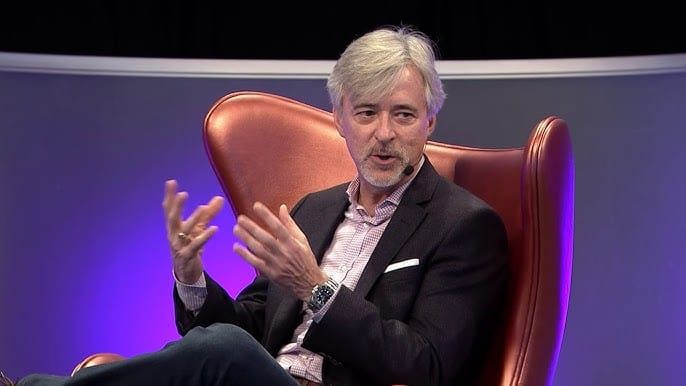
While the rollout of Tesla's much-anticipated robotaxi has drawn a gamut of mixed reactions from tech and automotive circles, one of the most intense critiques probably comes from John Krafcik, former CEO of Waymo, Alphabet's self-driving technology subsidiary. Krafcik, who played a crucial role in incubating autonomous technology, said he was disappointed by what he called Tesla's relatively shallow vision for its robotaxi service, which points to it lacking technological maturity compared with fully autonomous competitors.
Differences as Identified by Krafcik
Krafcik had long been a vocal critic of Tesla's way of progressing its self-driving technology, and he had guided Waymo through several stages of maturity in this field. He has criticized Tesla for relying too much on its Full Self-Driving (FSD) software that runs heavily on camera-based sensors and neural networks compared with the way Waymo has proceeded conservatively through the use of LiDAR and radar in its hardware.
Kraftcik, on the other hand, has a rather clear argument against the capacity of Tesla's robotaxi, drawn from his believe that tech developed by the company is still much too dependent on human supervision. The Autopilot and Full Self-Driving features developed by the company for its cars are referred to as advanced driver-assistance systems. However, these, at their current stage of development, do not give drivers the peace of mind to let go of the wheel while cruising; they should always be prepared to take control at an instant. This, according to Krafcik, keeps it very far from the definition of true autonomy-to operate without human intervention.
Autonomous Technology Debate: Tesla vs. Waymo
The heart of the Krafcik criticism revolves around a basic philosophical disagreement between Tesla and Waymo. Tesla has taken an iterative approach and incrementally built up its FSD capabilities over the air in over 10 million vehicles on the road. The company's plan to create a robotaxi service is an update to software that will make most of its existing automobiles into driverless taxis.
Waymo, instead, has concentrated its efforts on ground-up development of purpose-built autonomous vehicles, particularly on safety and redundancy through combinations of sensors and AI systems. The Waymo fleet operates within a few very thoroughly mapped and controlled environments around the world-an approach Krafcik claims is safer and more realistic to true autonomy.
Krafcik has been repeatedly stating that one of the big challenges that Tesla will fail to overcome on the road towards making its FSD software safe enough to let go and drive without people controlling the backup is full autonomy. He underscored that one has to be able to respond to millions and millions of edge cases, which is much more feasible with the rich sensor configuration of Waymo.
A Question of Readiness
Another area of debate for Krafcik is the timeline for Tesla's robotaxi vision. Elon Musk, Tesla CEO, has been sanguine in his entirely unapologetic timeline for rolling out the autonomous features in his company's vehicles-many of his predictions have bordered on hyperambitious. For example, as recently as this past year, Musk said that the company's robotaxi network would be up and running in a few years, though a person such as Krafcik has certainly been skeptical.
While tremendous strides have been made toward driver-assistance features, Krafcik says that the technology hasn't reached full autonomy. An ex-Waymo CEO has stressed that critical information relating to regulatory approvals, real-world testing, and the handling of complex urban environments-all those critical factors needed to deploy a safe and reliable autonomous taxi service-was lacking from Tesla's robotaxi reveal .