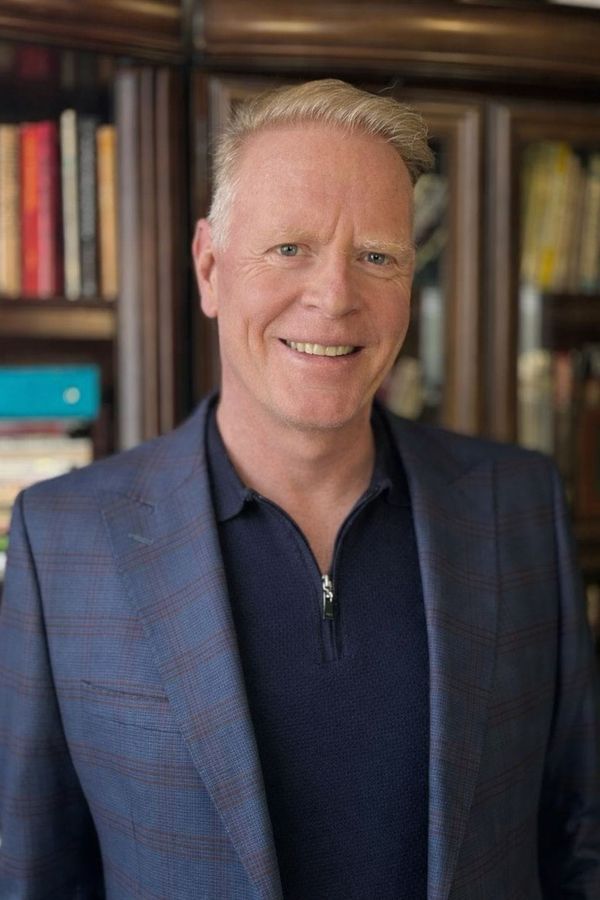
Former JCPenney CEO Mike Ullman Passes Away at 77, Remembered for Steady Leadership

Myron “Mike” Ullman, a towering figure in the retail industry and former CEO of Plano-based JCPenney, passed away on Tuesday at the age of 77, leaving behind a legacy of resilience, leadership, and a deep commitment to both his professional career and philanthropic endeavors. Ullman’s career was distinguished by his ability to guide some of the world’s most iconic retail brands through periods of tremendous change and challenge, making him one of the most respected leaders in the business world.
Born in 1946 in Youngstown, Ohio, Ullman’s early life was rooted in the values of hard work and perseverance. He embarked on a career in retail that would take him to the highest echelons of the industry, where he would leave an indelible mark on the companies he led. Ullman’s leadership journey began in earnest at Macy’s, where he briefly served as president in 1994. His tenure at Macy’s, though short-lived due to the company’s acquisition by Federated Department Stores, set the stage for a series of prominent roles that would define his career.
After leaving Macy’s, Ullman took on the role of chairman and CEO of DFS Group (Duty-Free Stores), a luxury retail division of LVMH, the world’s largest luxury goods conglomerate. At DFS, Ullman demonstrated his ability to manage complex global operations and drive growth in the highly competitive luxury retail sector. His leadership at LVMH further cemented his reputation as a retail visionary capable of navigating the challenges of a rapidly evolving industry.
In 2004, Ullman was appointed CEO of JCPenney, a position that would become one of the defining chapters of his career. At the time, JCPenney was a venerable but struggling department store chain facing significant challenges from the rise of big-box retailers and the growing popularity of online shopping. Ullman’s task was nothing short of monumental: to modernize the brand, revitalize its offerings, and steer the company through one of the most challenging periods in its history.
Under Ullman’s leadership, JCPenney underwent significant transformation. He introduced new brands, most notably Sephora, which became a cornerstone of the company’s strategy to attract younger, more fashion-forward customers. The addition of Sephora was a bold move that brought a fresh, modern appeal to JCPenney’s stores and helped differentiate the chain from its competitors. Ullman also focused on improving the in-store experience, investing in store renovations, and enhancing customer service.
However, Ullman’s tenure at JCPenney was not without its challenges. The retail landscape was undergoing seismic shifts, and JCPenney, like many mid-market retailers, was hit hard by the Great Recession of 2008. The economic downturn led to a sharp decline in consumer spending, particularly in the discretionary categories that were central to JCPenney’s business. Despite these challenges, Ullman remained steadfast in his commitment to the company and its employees.
In 2011, amid pressure from activist investor Bill Ackman, JCPenney’s board replaced Ullman with Ron Johnson, a former Apple Store executive. Johnson’s tenure at JCPenney was marked by a series of controversial decisions, including the elimination of discounts and sales, which alienated the company’s core customer base and led to significant financial losses. By 2013, it was clear that Johnson’s strategy had failed, and JCPenney was in crisis. The board turned to Ullman once again, asking him to return as CEO and stabilize the company.
Ullman’s return to JCPenney was seen as a critical moment in the company’s history. He immediately set about reversing many of Johnson’s changes, reintroducing discounts and promotions, and refocusing the company on its traditional strengths. Ullman’s steady hand and deep understanding of the retail business were instrumental in helping JCPenney navigate this turbulent period. Marvin Ellison, who succeeded Ullman as CEO in 2016, credited him with saving the company, noting that few executives could have accomplished what Ullman did during those challenging years.
Beyond his role at JCPenney, Ullman’s influence extended across the retail industry and into the world of philanthropy. He served as a director and later chairman of the Federal Reserve Bank of Dallas, where he played a key role in shaping economic policy in the region. Ullman also spent two decades on the board of Starbucks, where he became chairman after Howard Schultz retired in 2018. Schultz, who had a close personal and professional relationship with Ullman, described him as a mentor and a man of grace and integrity. Schultz credited Ullman with helping to guide Starbucks through a period of significant growth and change, and noted that Ullman’s wisdom and leadership were invaluable to the company.
Ullman’s commitment to servant leadership was evident in his philanthropic work, particularly with Mercy Ships, a floating hospital charity. Don Stephens, the founder of Mercy Ships, praised Ullman as a model of servant leadership, noting that his efforts were instrumental in raising the funds needed to purchase a new ship for the charity. Even in retirement, Ullman remained actively involved with Mercy Ships and other nonprofits, using his business acumen to help these organizations achieve their goals.
Despite his many professional achievements, Ullman was known for his humility and his ability to listen to others. He was not afraid to admit when he was wrong, a rare quality in a leader of his stature. Those who knew him best remember Ullman as a man who was always thinking, always strategizing, and always looking for ways to make a positive impact on the world around him.
Ullman’s passing marks the end of an era in the retail industry, but his legacy will live on in the companies he led, the people he mentored, and the many lives he touched through his philanthropy. His family is planning a celebration of his life in September in Montrose, Colorado, where he retired. He is survived by his wife, Cathy Emmons Ullman, their four sons, two daughters, siblings, and grandchildren. Ullman’s family, friends, and colleagues will remember him as a man of vision, integrity, and unwavering commitment to doing what was right, both in business and in life.