Emails Released By Congress Show Epstein Claiming Trump “Spent Hours” With Alleged Victim

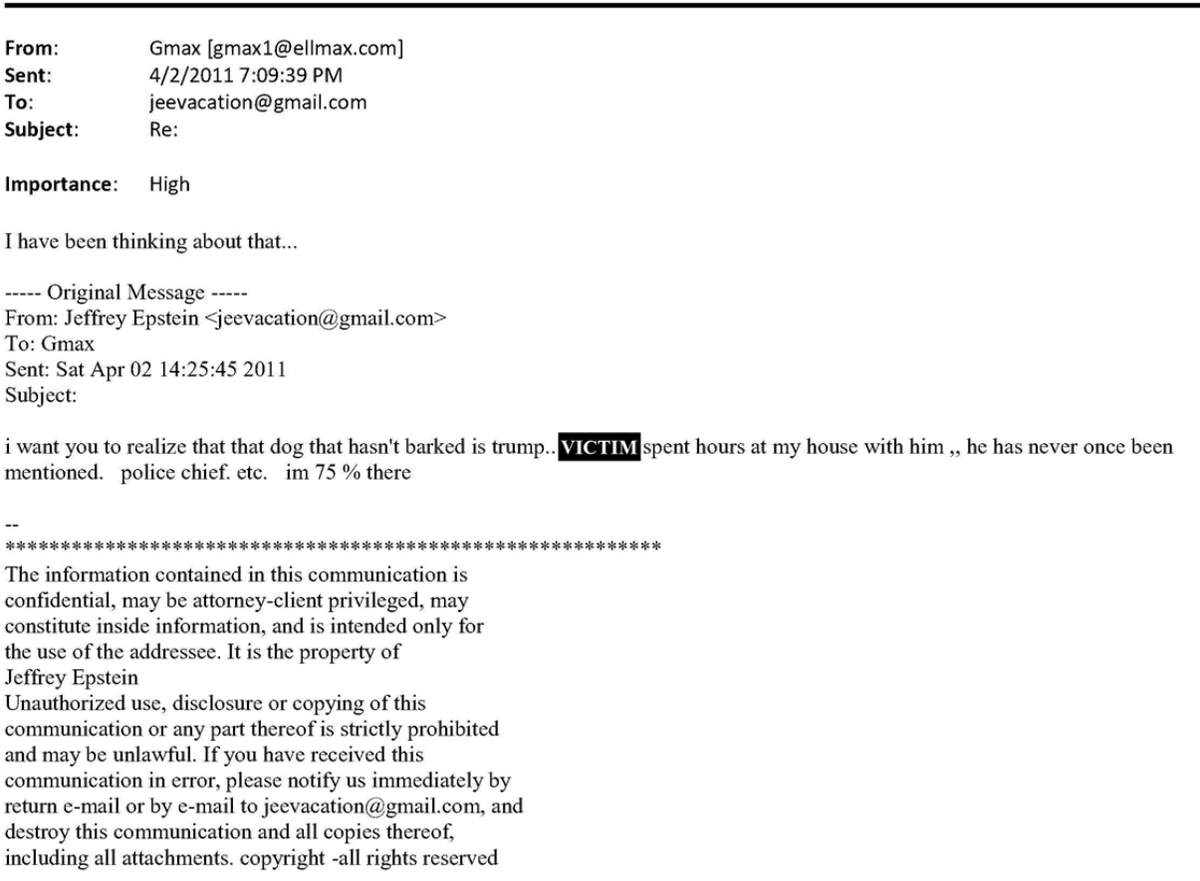
On November 12, 2025, lawmakers from the House Democratic side of the House Committee on Oversight and Government Reform released a trio of emails from Jeffrey Epstein’s estate that mention Donald Trump and raise fresh scrutiny of their past connection.
What the emails say
One of the key emails dates to April 2, 2011 and was sent from Epstein to his long-time associate Ghislaine Maxwell. In it, Epstein wrote:
“i want you to realize that that dog that hasn’t barked is trump.. [Victim] spent hours at my house with him ,, he has never once been mentioned.”
Maxwell replied later that day: “I have been thinking about that …”
The victim’s name was redacted in the publicly released version, though reports identify her as Virginia Giuffre.
A second email from January 31, 2019, addressed to author Michael Wolff, reads:
“Trump said he asked me to resign, never a member ever. Of course he knew about the girls as he asked ghislaine to stop”
That message appears to reference Epstein’s ties—or alleged ties—to Trump’s Florida resort, Mar‑a‑Lago, and assertions that Trump was aware of Epstein’s activities.
Why this matters
Though none of the emails claim that Trump committed wrongdoing, they reinvigorate questions about what he knew—and when—regarding Epstein’s trafficking network. According to many of the released documents, the fact that Epstein refers to Trump in connection with a victim and appears to suggest knowledge of the “girls” is drawing renewed attention.
For survivors of Epstein’s crimes and advocates who have long pushed for transparency, the disclosures represent a step toward revealing the full scope of Epstein’s network and the high-profile individuals who may have been involved. Democrats are now pressing for the release of the broader “Epstein files”—which include subpoenaed documents, emails, and other records from Epstein’s estate and the U.S. Department of Justice.
Response from the White House and Republicans
The White House swiftly dismissed the new releases. Press Secretary Karoline Leavitt called the emails a “selective leak” meant to “create a fake narrative” about Trump—and stated that they “prove absolutely nothing, other than the fact that President Trump did nothing wrong.”
Meanwhile, GOP lawmakers on the Oversight committee accused Democrats of cherry-picking documents for political effect. They pointed out that Republicans had also released tens of thousands of pages of Epstein-related material shortly after the Democratic release.
What happens next
With the addition of a newly sworn-in Democratic representative, Adelita Grijalva, the discharge petition to force a House vote on releasing the full Epstein documents reached the necessary threshold of 218 signatures.
If the vote proceeds, it could compel the DOJ or other agencies to turn over more records. However, reaching full transparency remains uncertain, as Senate approval and further executive cooperation may be needed. Many observers say that the newly revealed emails represent only a small portion of the larger trove of documents still under seal or pending review.
What’s still unclear
The released excerpts leave many questions unanswered. For instance, the context of the 2011 email is not fully explained—such as when the “hours at my house” reportedly occurred, or what investigation Epstein was referring to when he called Trump “that dog that hasn’t barked.”
Moreover, the redactions leave ambiguity around key names, dates, and the identity of the “girls” Epstein mentions. Past legal reviews have found no credible evidence that Epstein had a fully documented “client list” of high-profile individuals he trafficked, although congressional investigators continue to probe.
In short, the emails themselves stir questions more than they resolve them—but they provide fresh public footprints in a case long shrouded.