Elon Musk vs. OpenAI: The ICO Plan That Never Took Off
Elon Musk's bold ICO plan for overhauling OpenAI ran into obstacles and controversies that led it to fizzle. This piece explores the ideas behind it, problems encountered, and why it never made the grade.

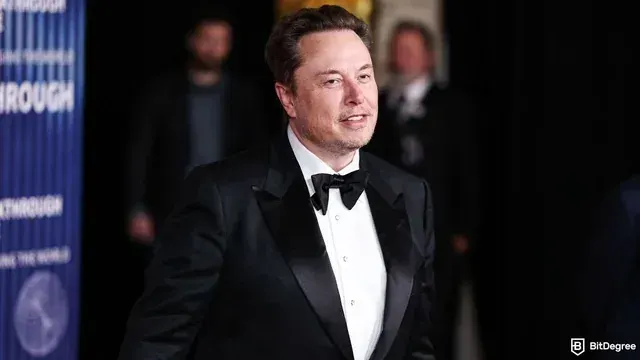
Elon Musk, the visionary entrepreneur behind such groundbreaking ventures as Tesla and SpaceX, is also very much rooted in the world of artificial intelligence. With OpenAI, an organization Musk co-founded in 2015, he aimed to ensure that any form of AGI would benefit humanity as a whole. However, his relationship with the company has not been straightforward, with periodic public disagreements and one of the most prominent ICO plans that never actually materialized.
OpenAI’s inception was backed by Musk and other tech luminaries, with a mission to create AI systems that are safe and accessible. Yet, over time, Musk grew increasingly disillusioned with OpenAI’s direction. One of the fundamental challenges was that in 2019 it shifted to a capped-profit structure instead of the non-profit model. Along with a series of changes in the leadership, these led to Musk's eventual distancing from the organization. He even resigned from the board of directors of this one too. Interest in AI not so much.
About the time he resigned from OpenAI, Musk was reportedly working on a pretty ambitious plan to fund research in AI in a completely new way: through an ICO. Musk is known for his bold and unconventional business approaches. With an ICO, he can actually bypass traditional routes in raising funds for venture capital. What he had in mind was a token-based economy to facilitate the funding of AI development in a decentralized manner and potentially in a more inclusive way. The ICO, in theory, would allow individuals to buy into the project, using cryptocurrency as a means to fund OpenAI’s research. Musk believed that by leveraging blockchain technology, he could provide greater transparency, democratize funding, and avoid some of the pitfalls of centralized, profit-driven organizations. However, the plan quickly ran into several roadblocks, both technical and regulatory. One of the significant obstacles Musk had to contend with was the regulatory situation surrounding cryptocurrencies and ICOs.
In 2017, at this point, ICOs were being closely watched by regulators, including the U.S. Securities and Exchange Commission, and many ICOs were declared unlawful or fraudulent. Even at a point when he was a very influential person, for Musk, he could not avoid the inevitable complications surrounding cryptocurrencies' regulations fully, which therefore thwarted the ICO concept's success.
Apart from that, critics and supporters alike, such as Elon Musk, raised ethical questions of funding AI, for example, from such decentralized currencies.
In fact, while democracy in the process was what Musk wanted, people feared it would lead to consequences that would worsen inequality or attract speculative investments into an otherwise substantive technological area. These ethical concerns, along with a lack of clarity about how the ICO would work in practice, led to increasingly skeptical members within the tech community. Apart from regulatory and ethical concerns, Musk's ICO did not strike the imagination of the business community. In spite of having a good reputation, the plan lacked practical infrastructure to convince investors and developers to buy in. At that time, cryptocurrency was still in its relative infancy-the volatile and uncertain asset that could not convince people to invest serious money in a project whose long-term viability was unclear. Ultimately, Elon Musk's ICO plan for OpenAI went a bandoned, and the company continued to evolve on a more traditional path. OpenAI obtained funding from investors such as Microsoft and continued its shift toward a hybrid non-profit-for-profit model that allowed it to continue developing cutting-edge AI technologies.
While the ICO scheme never materialized with Musk, his dream and visions about AI are quite relevant today. The AI technologies, which range from generative models like GPT-3, have changed industries in ways more than one could have imagined, and all the noise he made about their consequences for society has been holding very important debates about ethics and regulation. So, the ICO idea may not have worked, but what began to talk about-the future of AI and its governance-could be seen alive.