All You Need to Know About Haiti's Governing Council Replaces Prime Minister Amid Continuing Turmoil
Haiti's governing council officially replaced Prime Minister Ariel Henry as violence and socio-economic crisis in the country continue to worsen, replacing him amid persistent political instability. This development aims to put an end to national challenges and restore governance in the country.

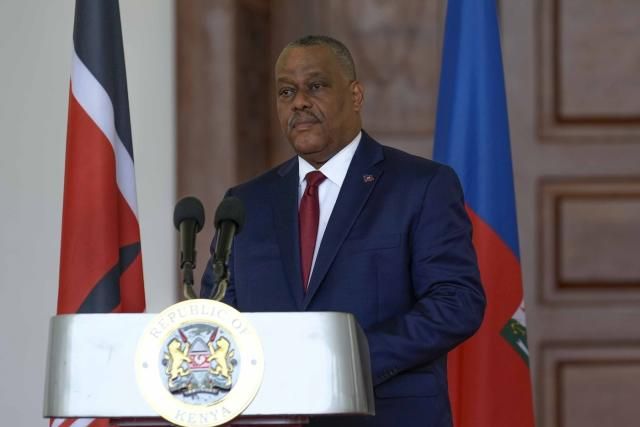
Already rocked to the core by decades of political and economic disturbances, Haiti has entered yet another crucial stage as its ruling council recently ousted Prime Minister Ariel Henry. The appointment, among other measures, is part of ongoing efforts at ridding the country of instability that has been worsening in the past months amid aggravating violence and economic mishaps.
This change shifts the turbulent landscape of the country's politics. Ariel Henry has been the Prime Minister since the assassination of President Jovenel Moïse in July 2021. Ever since, Haiti has not had a government in a functioning sense because violent gangs have made their grip on the country worse, making the government unable to function properly. Henry's term has been replete with persistent riots, a skyrocketing murder rate, and an economic decline that has placed Haitians on hard times.
The Council's decision to oust Henry is from the Council that designs and guides Haiti toward elections after the assassination of its president, Moïse. It has been of key importance in running the country, a body established solely to take the country out of this political crisis. Still, the Council's move to oust the head of government has elicited opinion both for and against the council's decision.Proponents believe that a new leader is a must to curb the violence and restore order and address the humanitarian situation. Haiti's population left in a disastrous situation, out of reach of the most fundamental services like healthcare, education, and food. A public frustration has spilled out into protests, and that political instability has discouraged international investments and support, further complicating the crisis.
The skeptics are the critics who are skeptical of this decision taken by the governing council. Replacing Henry may not solve the problems plaguing the nation more profound, such as incohesion in politics and the gathering of power by criminal gangs. Moreover, there have also been complains that the council itself does not possess broad legitimacy and cannot gain much recognition abroad.
With all these challenges, the newly selected leadership council members would really have a hard time. Control of the streets will surely be on the agenda list of the newly elected Prime Minister, as he also has gangs ruling the streets and hold not only the civilians hostage but, at the same time, threaten the leaders themselves. The Prime Minister would have to initiate dialogue with different factions of the political arena and international stakeholders to chart the country toward democratic elections.
International bodies, such as the United Nations and the United States, have called on Haiti's leadership to carve out a route toward elections and restoring law and order. Yet with Haiti still in turmoil, the appointment of another Prime Minister under the governing council is yet another chapter in the country's pathway to finding stability.
Ultimately, whether such a new government will succeed in solving the historical deep-rooted problems of violence, corruption, and poverty the nation has seen for several decades will depend on the future of the nation. Only time can tell if this change in leadership can precede a brighter future.