All the Wicked Lore You Need to Understand the New Movie
Unravel the layers of "Wicked" a tale of misunderstood witches, political intrigue, and musical magic. Explore its roots in Baum's "Oz" Maguire's novel, and the Broadway hit reshaped for film.

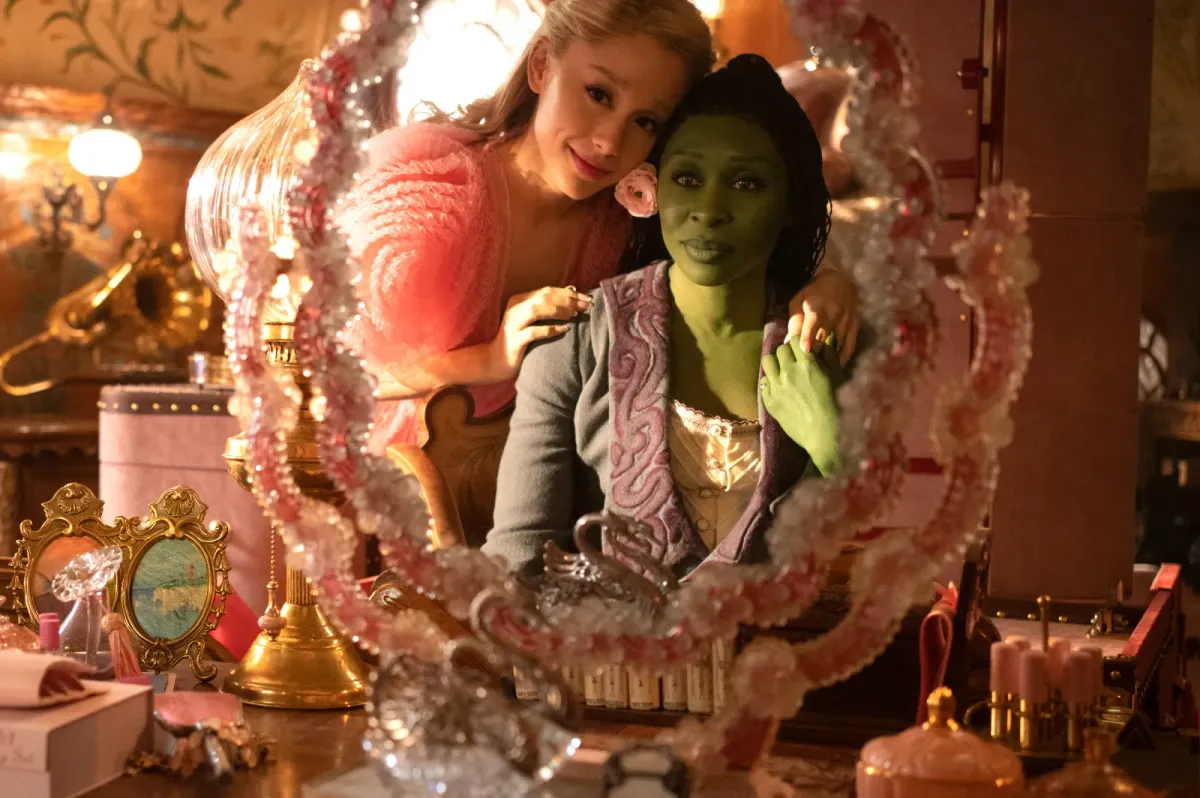
When "Wicked: Part 1" opens in theaters this November, audiences will enter a world of soaring music, vibrant characters, and a backstory that is as layered as the friendship between Glinda the Good and Elphaba, the Wicked Witch of the West. The tale's journey to the big screen, however, is as intricate as the tale itself and weaves inspirations from literature, Broadway, and beyond. Here's your guide on how to navigate the complexity of this "Wizard of Oz" prequel.
Baum's Oz to Maguire's Revisionist Lens Now the story begins - or rather continues to start - L. Frank Baum's "The Wonderful Wizard of Oz" (1900), where magic land Oz first springs up on paper. Baum's imaginative world has grown into more than 13 sequels, creating a foundation of American fantasy literature. This world was further reignited in MGM's 1939 film, "The Wizard of Oz" as Judy Garland's Dorothy lives forever and Margaret Hamilton's chilling Wicked Witch.
Jump to 1995: Gregory Maguire's "Wicked: The Life and Times of the Wicked Witch of the West" reimagines the whole story through a moral and political lens. The novel turns the Wicked Witch, now named Elphaba, into a sympathetic figure—a victim of prejudice, political corruption, and personal tragedy. Animals are a staple of Maguire's Oz; they speak but are marginalized by the Wizard's regime, offering sharp allegory on discrimination and power.
The Musical Sensation In 2003, the novel was adapted into the Broadway musical "Wicked" with music composed by Stephen Schwartz and a book by Winnie Holzman. The musical pretty much eradicates most of the politicized/moral grayness of the novel and insists on the dense friendship of Elphaba and Glinda. Their story is meanwhile played out as the manipulative games played around them by the Wizard, complete with crowd-pleasing set pieces, such as when Elphaba makes it impossible to be grounded.
The musical was a phenomenon: bright, sentimental, and with "Popular" and "Defying Gravity", as catchy as a mouthful of Pop Rocks. Its 21-year Broadway run made it a cultural touchstone, leading Universal Pictures to greenlight the long-awaited film adaptation.
Enter the Film Adaptation Directed by Jon M. Chu (Crazy Rich Asians), the cinematic adaptation is split into two parts, promising an expansive retelling of the stage production. Cynthia Erivo plays Elphaba and Ariana Grande, Glinda, in a star-studded "Wicked: Part 1". According to reports, Grande brings a mix of Kristin Chenoweth's Broadway flair with classic Hollywood charm to make her both comically vain and deeply vulnerable.
Chu's adaptation maintains the kernel of the musical but develops more intense political undertones in Maguire's Oz. A subplot found in the book that was simplified in the stage version is introduced: anti-Animal discrimination. This plot reveals how the Wizard gained power by suppressing the talking Animals, a comparable system of oppression that politicizes Elphaba.
What Makes the Film Unique Comparatively speaking, the film transforms the 90-minute first act of the stage production into a sprawling two hour epic. This enables more developed world-building but also brings some tonal problems. Critics have identified the film as oscillating between quirky, lightweight musical times and darker, political-lyric sequences; yet, the acting, especially from Grande's Glinda, is praised to capture the emotional depth of the story.
The film’s visual spectacle is another standout. From Glinda's bubble-filled grand entrance to Elphaba’s gravity-defying flight, the movie promises breathtaking moments. Fans can also expect Easter eggs nodding to Baum’s "Oz" and Maguire’s novel, bridging the many layers of "Wicked" lore.
At its core, "Wicked" is a story about perspective: villains aren't born; they're made. From Baum's original books to Maguire's complex allegory, or as expounded by the Broadway show's heartwarming friendship, one version of the story invades the gray areas of morality. The film adaptation follows along the same vein, encouraging the audience to see the world from Elphaba's eye.
As "Wicked: Part 1" prepares to enchant viewers, understanding its layered history deepens the experience. From anti-Animal fascism to Glinda's journey from shallow to sincere, the story reminds us that even in a land as fantastical as Oz, humanity’s struggles and triumphs remain universal.